

TL;DR
A competition research tool is software that analyzes your competitors' digital marketing strategies, from their SEO and paid ad campaigns to their content and social media performance. Using these tools gives you the data to identify market gaps, benchmark your performance, and build more effective campaigns. Leading all-in-one platforms like Semrush and Ahrefs provide a comprehensive view, while specialized tools focus on specific channels.
What Are Competitor Research Tools and Why Are They Essential?
Competitor research tools are software platforms designed to collect and analyze data about your rivals' online activities. They act like a digital reconnaissance squad, giving you a clear view of the strategies powering their web traffic, lead generation, and sales. By entering a competitor's domain, you can uncover everything from their top-ranking keywords and most profitable ads to their backlink profile and social media engagement. This intelligence helps you make your business unique and benchmark your performance against the industry leaders.
These tools are essential because they replace guesswork with data-driven strategy. Instead of wondering why a competitor is succeeding, you can see the exact tactics they employ. The data provided typically falls into several key categories: SEO (which keywords they rank for), PPC (which ads they're running and how much they spend), content marketing (what topics resonate with their audience), and social media (their engagement strategies). Understanding this mix allows you to spot opportunities they've missed and avoid mistakes they've already made.
In the age of AI, some wonder if tools like ChatGPT can handle this analysis. While AI assistants can certainly speed up the process by summarizing publicly available data, they often lack the deep, proprietary datasets and specialized analytics of dedicated platforms. Dedicated tools are built to track historical performance, uncover paid ad creatives, and analyze massive backlink indexes—capabilities that go far beyond a general AI's scope. However, once you've gathered these insights, executing on them, especially in content creation, can be accelerated. Marketers and creators can revolutionize their workflow with platforms like BlogSpark, an AI blog post generator that helps transform competitive insights into SEO-optimized articles quickly, ensuring you can act on your research without delay.

How to Choose the Right Competitor Analysis Tool
Selecting the best competition research tool isn't about finding a single 'best' option; it's about finding the right fit for your specific goals, budget, and team. The ideal tool for an SEO-focused startup will differ from that of a large enterprise managing a complex social media presence. To make an informed decision, evaluate your needs against a few key criteria.
First, define your primary goal. Are you trying to outrank competitors in search results? Then an SEO-centric tool with strong keyword gap and backlink analysis features, like Ahrefs, is crucial. If your focus is on paid advertising, a platform like SpyFu, which excels at revealing PPC keywords and ad history, would be more appropriate. For businesses centered on brand perception and social engagement, a social listening tool like Sprout Social provides invaluable insights into competitor conversations and sentiment.
Next, consider your budget and business size. Many powerful platforms are premium services, but there are excellent options for every price point. Solopreneurs and small businesses can start with tools offering robust free plans or budget-friendly tiers, such as SpyFu or Social Blade. Larger enterprises may require the comprehensive data and unlimited projects offered by the higher-tier plans of all-in-one suites like Semrush. Finally, evaluate ease of use. If your team lacks deep technical expertise, choose a tool with an intuitive interface and clear, actionable reports.
To simplify your choice, follow this three-step checklist:
- Define Your Primary Goal: Are you focused on SEO, PPC, social media, or general market research?
- Set Your Budget: Determine what you can realistically invest, whether it's a free plan or an enterprise-level subscription.
- Assess Your Team's Needs: Consider your team's size and technical skill to find a tool that fits your workflow.
The Best All-in-One Competitor Research Platforms
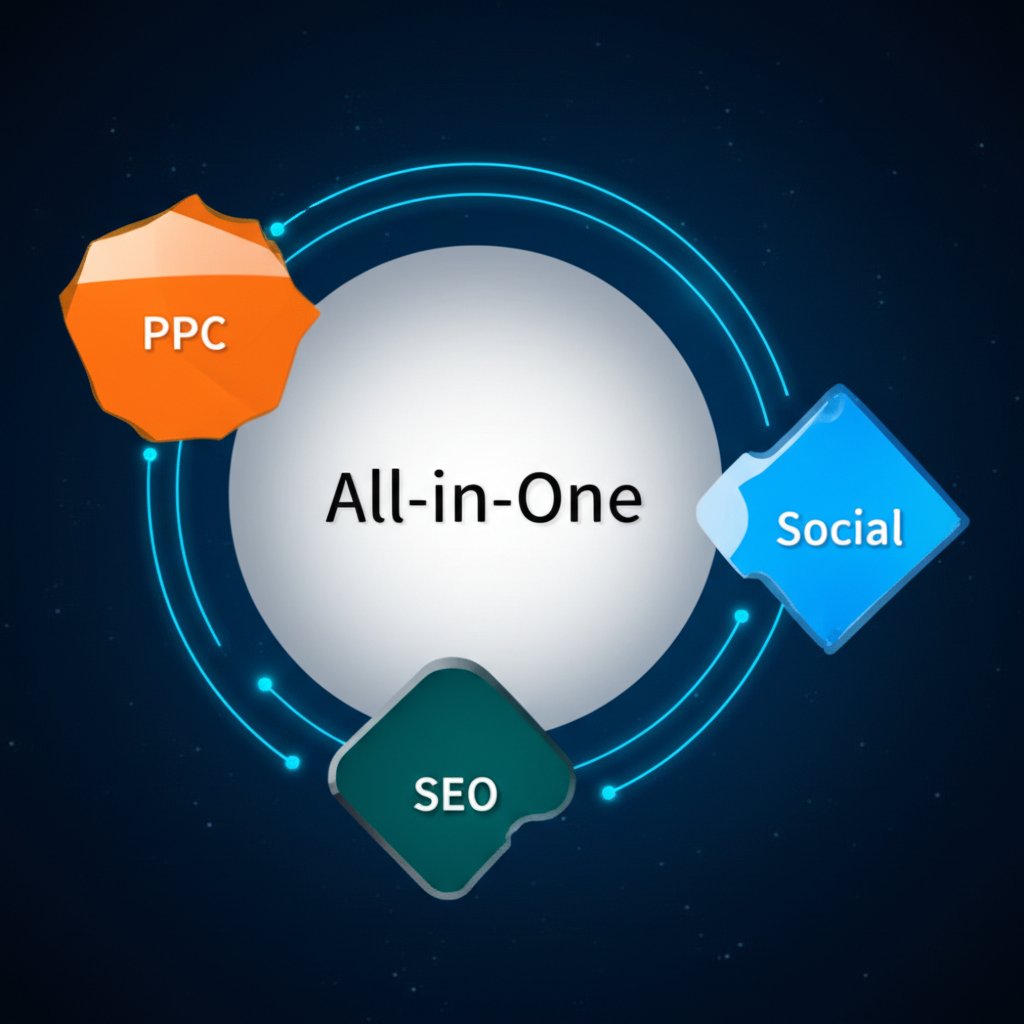
For businesses that need a comprehensive view of the competitive landscape, all-in-one platforms are the gold standard. These powerful suites combine data from SEO, PPC, content, and market research into a single dashboard, providing a 360-degree view of your rivals' strategies. The undisputed leaders in this category are Semrush, Ahrefs, and Similarweb, each offering a unique set of strengths.
| Tool | Best For | Key Features | Pricing Model |
|---|---|---|---|
| Semrush | In-depth SEO & PPC research | Keyword Gap, Traffic Analytics, Ad Research, Site Audits | Subscription (from ~$117/mo) |
| Ahrefs | Backlink and keyword gap analysis | Site Explorer, Massive Backlink Index, Content Explorer | Subscription (from ~$129/mo) |
| Similarweb | Market research & domain-level insights | Traffic Source Analysis, Audience Demographics, Industry Trends | Subscription (from ~$125/mo) |
Semrush
Semrush is often considered the Swiss Army knife of digital marketing. It's an incredibly robust platform that excels at providing detailed insights into a competitor's SEO and PPC strategies. Its Organic Research tool allows you to see every keyword your competitors rank for, while the Advertising Research tool uncovers their ad copy, budgets, and keyword targets. One of its most powerful features is the Keyword Gap tool, which compares your keyword profile to your competitors' and instantly reveals valuable keywords you're missing out on.
Pros
- Extensive suite of tools covering SEO, PPC, content, and social media.
- Excellent for identifying keyword gaps and analyzing ad strategies.
- User-friendly interface with actionable reports.
Cons
- Can be expensive for small businesses or freelancers.
- The sheer number of features can have a slight learning curve.
Ahrefs
Ahrefs is renowned for its phenomenal backlink analysis capabilities, boasting one of the largest and most up-to-date backlink indexes in the world. This makes it an indispensable tool for any strategy centered on link building and domain authority. Its Site Explorer feature provides a deep dive into any website's organic traffic, backlink profile, and paid keywords. Ahrefs is also excellent for content research, with a Content Explorer that helps you find top-performing content in your niche to inspire your own strategy.
Pros
- Best-in-class backlink database and analysis tools.
- Powerful keyword and content gap analysis features.
- Intuitive interface that simplifies complex data.
Cons
- Pricing can be a barrier for those on a tight budget.
- Some features are less developed compared to its core SEO offerings.
Similarweb
While Semrush and Ahrefs focus heavily on search, Similarweb excels at providing high-level market intelligence and website traffic analysis. It's the ideal tool for understanding a competitor's overall digital footprint, including their primary traffic sources (direct, referral, search, social), audience demographics, and engagement metrics. This makes it invaluable for benchmarking your market share and identifying broader industry trends, rather than just focusing on keyword-level tactics.
Pros
- Excellent for analyzing traffic sources and audience behavior.
- Provides broad market and industry-level insights.
- User-friendly dashboard for comparing multiple competitors at a glance.
Cons
- Less granular data on specific keywords and backlinks compared to Ahrefs or Semrush.
- Can be costly, especially for access to its more advanced features.
Top Specialized Tools for Specific Marketing Channels
While all-in-one platforms offer breadth, sometimes you need a tool that goes deep into a specific channel. Specialized tools provide focused, powerful insights for PPC, social media, or content marketing that can surpass the capabilities of more generalist platforms. These are perfect for teams that have a primary focus or want to supplement their main toolkit with best-in-class analytics for a particular area.
For PPC & Ad Strategy: SpyFu
SpyFu is a go-to tool for reverse-engineering your competitors' paid search strategies. Its core strength lies in its historical database of PPC keywords and ad creatives, allowing you to see every keyword a competitor has bought on Google and every ad they've tested for over a decade. This historical perspective is invaluable for understanding what has worked (and what hasn't) for your rivals, helping you avoid costly mistakes and build on their successes. You can download their most profitable keywords and see their estimated monthly ad spend.
For Social Media Listening: Sprout Social
Sprout Social is a comprehensive social media management platform that offers powerful competitor analysis features. Beyond just scheduling posts, it allows you to monitor competitors' performance across platforms like Facebook and Instagram. You can track their audience growth, engagement rates, and top-performing content in detailed comparison reports. Its social listening capabilities also help you tap into industry conversations, understand brand sentiment, and identify trends as they emerge, giving you a strategic edge.
For Content & Influencer Research: BuzzSumo
When it comes to understanding what content resonates with your target audience, BuzzSumo is a market leader. You can enter a competitor's domain or a topic to discover the most-shared content across the web. This helps you identify trending topics, successful content formats, and key influencers in your niche. By analyzing what makes your competitors' content successful—from headlines to social shares—you can refine your own content strategy to generate more engagement and authority.
Best Free & Budget-Friendly Competitor Analysis Tools
Gaining a competitive edge doesn't have to come with a hefty price tag. Several powerful tools offer free plans or low-cost entry points that provide significant value, especially for small businesses, freelancers, or marketers just starting with competitor analysis. These tools are perfect for gathering essential data without a major financial commitment.
SpyFu (Free Plan)
SpyFu offers one of the most generous free plans available. While premium features are limited, you can still search any domain and get a high-level overview of its organic and paid keywords, top competitors, and ranking history. This is incredibly useful for quick checks and initial research. The free access provides enough data to identify a competitor's core keyword strategy, making it an excellent starting point for any analysis.
Social Blade
For basic social media analytics, Social Blade is a fantastic free resource. It primarily tracks user statistics for platforms like YouTube, Twitch, Instagram, and X (formerly Twitter). You can look up any competitor's profile and see historical data on follower growth, engagement rates, and estimated earnings (for platforms like YouTube). While it lacks the deep sentiment analysis of premium tools, its straightforward charts are perfect for quickly benchmarking your social media growth against competitors.
MozBar
MozBar is a free Chrome extension that provides instant SEO metrics for any page you visit or see in a search engine results page (SERP). As you browse, it displays key data like Domain Authority (DA) and Page Authority (PA), giving you a quick sense of a competitor's website strength. In the SERPs, it provides an overlay that lets you compare the link metrics of all ranking pages at a glance. It's an indispensable tool for on-the-fly SEO analysis.
Google Trends
Don't overlook the power of Google's own free tools. Google Trends allows you to explore the popularity of search terms over time. You can compare the search interest in your brand versus your competitors, identify seasonal trends in your industry, and discover related queries that are gaining traction. It’s an essential tool for understanding broader market interest and aligning your content with what people are actively searching for.
Frequently Asked Questions
1. Can ChatGPT do a competitor analysis?
ChatGPT and other large language models can assist with competitor analysis by summarizing publicly available information, generating lists of potential competitors, and analyzing the tone of their content. However, they cannot access the proprietary, real-time data on traffic, keywords, and backlinks that specialized competitor research tools provide. They are best used as a tool to speed up research, not replace dedicated platforms.
2. What are the 4 P's of competitor analysis?
The 4 P's of competitor analysis is a marketing framework used to evaluate a competitor's strategy. They stand for Product (what features and quality do they offer?), Price (what are their pricing strategies and discounts?), Place (which distribution channels do they use to sell their product?), and Promotion (what marketing and advertising tactics do they employ?). Analyzing these four areas provides a comprehensive view of a competitor's market position.
3. What is a competitive analysis tool?
A competitive analysis tool is a software solution that organizations use to collect, monitor, and analyze data about their competitors. These tools provide insights into a rival's digital marketing strategies, including their SEO performance, paid advertising campaigns, social media engagement, content strategy, and website traffic. The goal is to use this data to identify opportunities, benchmark performance, and make more informed strategic decisions.