TL;DR
To tell if writing is AI-generated, use a combination of automated detection tools and careful manual analysis. Key manual checks involve looking for telltale signs such as flawless but generic language, a neutral or overly formal tone, factual inconsistencies, and the repetition of certain words or phrases. AI content often lacks a distinct human voice and may contain unusual formatting or fabricated sources.
Understanding the Telltale Signs of AI Content
Before turning to automated software, the most reliable way to identify AI-generated text is to develop an eye for its unique characteristics. Large Language Models (LLMs) are trained on vast datasets, which causes them to regress toward common patterns, often resulting in writing that feels polished but soulless. This statistical smoothing creates several giveaways that a human reader can spot with careful observation.
One of the most common indicators is a tone that is ‘too perfect’. Human writing, even from skilled authors, contains natural variations, occasional errors, and stylistic quirks. In contrast, AI-generated text often features flawless grammar and syntax but lacks a genuine voice or emotional depth. According to guidance from East Central College, if a student who typically struggles with grammar suddenly submits a perfect paper, it could be a significant red flag. This perfection often comes with a neutral, overly balanced tone that avoids strong opinions or unique perspectives.
Repetition and inconsistencies are other major signs. An AI might repeat the same idea using slightly different wording or rely on the same sentence structures throughout a piece. Capitol Technology University notes that AI can also produce nonsensical sentences or abrupt shifts in topic as it struggles to maintain coherence. Furthermore, AI models often fabricate information, a phenomenon known as ‘hallucination’. This can manifest as inaccurate data, quotes attributed to the wrong person, or citations for articles and studies that do not exist.
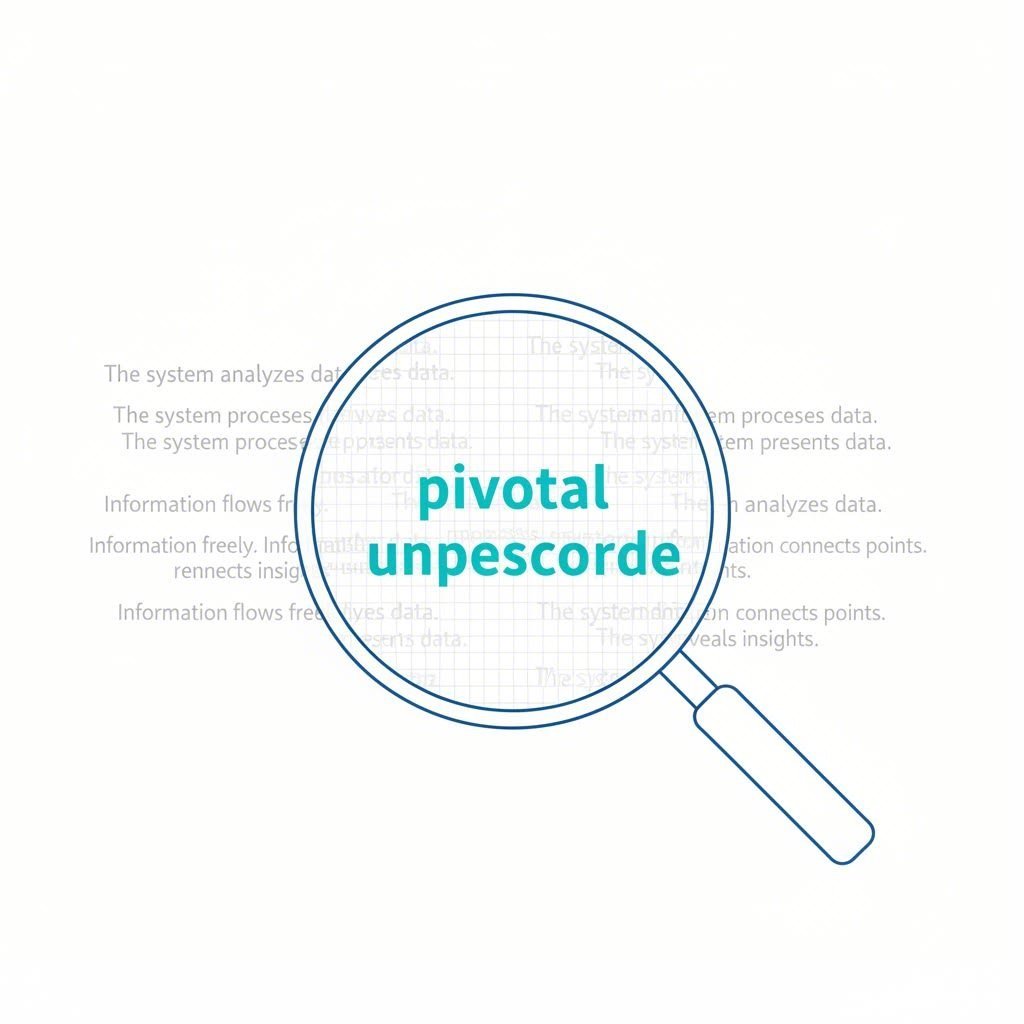
The language and formatting itself can be a dead giveaway. Wikipedia's extensive guide on the topic points to a specific, overused “AI vocabulary” that includes words like pivotal, tapestry, underscore, delve, and showcase. The presence of several of these words in one article is a strong signal. Formatting tics, as detailed by Wikipedia, can also be revealing, such as using Title Case for all section headings or an excessive use of boldface to emphasize keywords.
To put this into practice, here is a simple checklist for manual review:
- Check the Tone: Does the writing sound generic, overly formal, or lack a distinct personality? Is it unusually flawless compared to other known samples from the author?
- Look for Repetition: Are specific words, phrases, or sentence structures used repeatedly? Does the text circle back to the same points without adding new insight?
- Verify Facts and Sources: Spot-check any data, quotes, or citations. Do the sources exist? Do they actually support the claims being made?
- Analyze Word Choice: Is the text filled with common AI buzzwords (e.g., 'navigating the landscape,' 'a testament to')? Does it use elegant variation to avoid repeating a name, leading to awkward phrasing?
- Examine Formatting: Are there unusual formatting choices, like title-cased headings or strangely structured lists?
Using AI Detection Tools for Automated Analysis
While manual analysis is crucial, AI detection tools offer a fast, scalable way to get an initial assessment. These platforms analyze text to calculate the probability that it was written by a machine. They work by identifying patterns in word choice, sentence length, and grammatical structure that are characteristic of AI models. Popular tools mentioned across search results include GPTZero, Grammarly's AI detector, and Copyleaks.
These tools are incredibly easy to use. The process typically involves three simple steps: copy the suspicious text, paste it into the detector's analysis box, and run the scan. The tool then provides a score, often a percentage, indicating the likelihood of AI generation. Some advanced detectors even highlight specific sentences that appear to be machine-written, giving you a more granular view.
However, it is critical to understand their limitations. As East Central College warns, these tools are notoriously unreliable and can produce a significant number of false positives and negatives. They have been known to flag human-written documents, including historical texts, as AI-generated. This is particularly problematic for non-native English speakers, whose writing patterns can sometimes mimic those of an AI, leading to higher rates of false accusations. Therefore, a high AI-detection score should be treated as an indicator for further investigation, not as definitive proof.
The challenge of detection is constantly growing as AI writing technology becomes more advanced. For instance, sophisticated platforms like BlogSpark's advanced AI blog writer are designed to create content with a customizable brand voice, making it much harder to distinguish from human-written articles. This constant evolution means that detectors are always playing catch-up. For users, this underscores the importance of not relying on a single tool or score.
To help you navigate the options, here is a brief comparison of commonly mentioned free tools:
| Tool Name | Key Feature | Best For |
|---|---|---|
| GPTZero | Provides an overall AI score and sentence-by-sentence highlighting. | Quickly scanning documents for an initial probability assessment. |
| Grammarly AI Detector | Offers a clear score indicating the percentage of text that appears to be AI-generated. | Users who already use Grammarly for writing and want an integrated tool. |
| Copyleaks | Claims high accuracy and can detect text blended with human writing. | High-stakes situations where distinguishing between human and AI-assisted text is critical. |
Beyond the Text: Applying Contextual Clues
The most sophisticated detection method goes beyond analyzing the text itself and considers the context in which it was created. Automated tools and linguistic analysis can be fooled, but a holistic, contextual evaluation is much harder to beat. This approach involves using external information about the author, the publication, and the topic to make an informed judgment.
This is especially critical in academic and professional settings. The featured snippet in search results gives a perfect example: if a student who consistently struggles with grammar suddenly submits a flawless essay, the change in quality is a powerful contextual clue. This doesn't automatically mean AI was used, but it warrants a conversation. An effective way to verify authorship is to simply quiz the person on their work. Ask them to explain a complex argument in their own words or define a specific term they used. Hesitation or confusion can be very revealing.
The author's known expertise and writing history are also vital. Consider a blog post on a highly technical subject written by a supposed expert. If the article only contains generic, surface-level information that anyone could find with a quick search, it may be AI-generated. A true expert's writing should demonstrate nuance, unique insights, and deep knowledge that an AI, which synthesizes existing information, typically cannot replicate. The voice should be consistent with their previous publications.
When you are suspicious, especially in an editorial or academic capacity, ask yourself these guiding questions:
- Is this consistent? Does the writing style, tone, and quality match the author's previous work?
- Is the knowledge credible? Does the content demonstrate genuine expertise or is it a shallow summary of publicly available information?
- Are the sources verifiable? As mentioned earlier, AI often fabricates sources. A quick check to see if cited articles or authors exist is a simple but powerful verification step.
Ultimately, this layer of human judgment is our best defense against sophisticated AI-generated content. It shifts the focus from finding a single 'gotcha' sign to building a comprehensive case based on evidence, consistency, and common sense. While it is the most time-consuming method, it is also the most definitive.
A Hybrid Approach to Content Verification
Detecting AI-generated writing is not a simple case of using one tool or looking for a single flaw. The most effective strategy is a hybrid approach that combines the speed of automated tools with the nuance of human judgment. Start with a quick scan using a detector to flag potential issues, but never take its verdict as final. Use the results as a starting point for a deeper manual and contextual analysis.
By learning to recognize the linguistic tells of AI, verifying factual claims, and considering the author's context, you can develop a robust and reliable method for distinguishing machine-generated text from authentic human expression. As AI technology continues to advance, these critical thinking skills will become more important than ever for maintaining authenticity and integrity in the digital world.

Frequently Asked Questions
1. How to differentiate between AI and human writing?
The primary differences lie in voice, consistency, and depth. Human writing often has a unique voice, contains occasional errors or stylistic quirks, and provides original analysis. AI writing tends to be grammatically perfect but generic, may repeat ideas, and often summarizes existing information without offering new insights. Look for a lack of personal anecdotes, emotion, and the presence of formulaic language as signs of AI.
2. How do I check if I am talking to an AI?
In a conversational context like a chatbot, look for repetition and response speed. AI chatbots often rely on pre-programmed patterns and may give similar answers to different questions. They also tend to respond almost instantly. Humans, in contrast, vary their responses more naturally and take time to think. You can also test an AI by asking questions that require common sense, emotional understanding, or knowledge of very recent events, as these are areas where AI often struggles.