
TL;DR
Integrated online marketing is a strategic approach that unifies all digital marketing channels to deliver a cohesive, consistent, and seamless brand message. By aligning everything from SEO and content marketing to social media and paid ads, businesses can create a more powerful and memorable customer experience. This synergy not only builds brand trust and loyalty but also significantly improves marketing efficiency and return on investment (ROI).
What Is Integrated Online Marketing?: Core Concepts Explained
Integrated online marketing is the strategic coordination of various digital channels and tactics to present a unified and consistent brand message to a target audience. Instead of channels operating in silos, they work together harmoniously to guide the customer through a seamless journey. As described by Salesforce, the goal is to ensure all marketing efforts work together to achieve business objectives. This approach treats each channel as a piece of a larger puzzle; individually, they have an impact, but when combined correctly, they create a complete and compelling picture of the brand.
The core principle is synergy. Think of an orchestra where each instrument represents a marketing channel—SEO, social media, email, PPC. Each plays a different part, but they follow the same sheet of music (the core brand message) to create a beautiful symphony. When a customer sees a consistent message on a company's Instagram, reads a blog post that echoes that message, and receives an email that reinforces it, the brand's identity becomes stronger and more trustworthy. This consistency is crucial for building brand recognition and fostering long-term customer relationships.
It's important to differentiate integrated marketing from similar concepts like multichannel and omnichannel marketing. While all three use multiple channels, their strategic focus differs. Multichannel marketing simply means using more than one channel to reach customers, but these channels often operate independently with separate strategies. Omnichannel marketing focuses on creating a seamless customer experience across channels, ensuring smooth transitions between them. Integrated marketing, however, is primarily concerned with the consistency of the message itself, ensuring that no matter the channel, the brand's story, values, and offers are perfectly aligned. AdRoll highlights that while omnichannel focuses on the shopper's experience, integrated marketing focuses on the brand's communication strategy.
| Strategy | Primary Focus | Channel Approach | Customer Experience |
|---|---|---|---|
| Multichannel Marketing | Presence | Channels operate independently; inconsistent messaging is possible. | Can be fragmented or disconnected. |
| Omnichannel Marketing | Customer Experience | Channels are interconnected to provide a seamless user journey. | Unified and fluid across touchpoints. |
| Integrated Marketing | Message Consistency | Channels are unified to deliver one cohesive brand message. | Consistent and reinforcing, which builds trust. |
The Strategic Importance of an Integrated Approach
Adopting an integrated online marketing strategy is no longer just a best practice; it's a critical component for sustainable growth and a competitive edge. The primary benefit is the creation of a strong, consistent brand identity. When customers encounter the same core message, visuals, and tone of voice across your website, social media, and email campaigns, it builds familiarity and trust. This consistency reinforces your brand's values and makes it more memorable in a crowded marketplace, which, as noted by Salesforce, fosters loyalty and advocacy.
Beyond branding, an integrated approach delivers a vastly superior customer experience. Today's customer journey is not linear; a person might discover a product on Instagram, research it on a blog, and finally purchase it after receiving a promotional email. A non-integrated strategy creates jarring transitions and conflicting information, frustrating potential buyers. An integrated strategy ensures a smooth, logical progression, making the customer feel understood and valued at every touchpoint. This seamless experience is a key driver of customer satisfaction and retention.
From a business perspective, integration leads to a significantly higher return on investment (ROI). Research has shown that campaigns integrating four or more digital channels can outperform single-channel campaigns by 300%. This is because channels work synergistically. For example, content marketing efforts fuel SEO, social media posts can be boosted with paid ads, and email marketing can nurture leads generated from all other channels. This eliminates redundant efforts, reduces wasted ad spend, and allows for more efficient allocation of resources. By aligning efforts, you ensure that every marketing dollar is working harder to achieve your business goals.
Finally, an integrated strategy provides more holistic and actionable data insights. When channels are managed in silos, you get a fragmented view of performance, making it difficult to understand the complete customer journey. By integrating analytics, you can track how users move between channels and identify which touchpoints are most effective at driving conversions. This comprehensive view allows for smarter, data-driven decisions, enabling you to optimize your entire marketing ecosystem rather than just individual components. This leads to more effective budget allocation and continuous improvement of your marketing strategy.
Essential Channels of an Integrated Marketing Framework
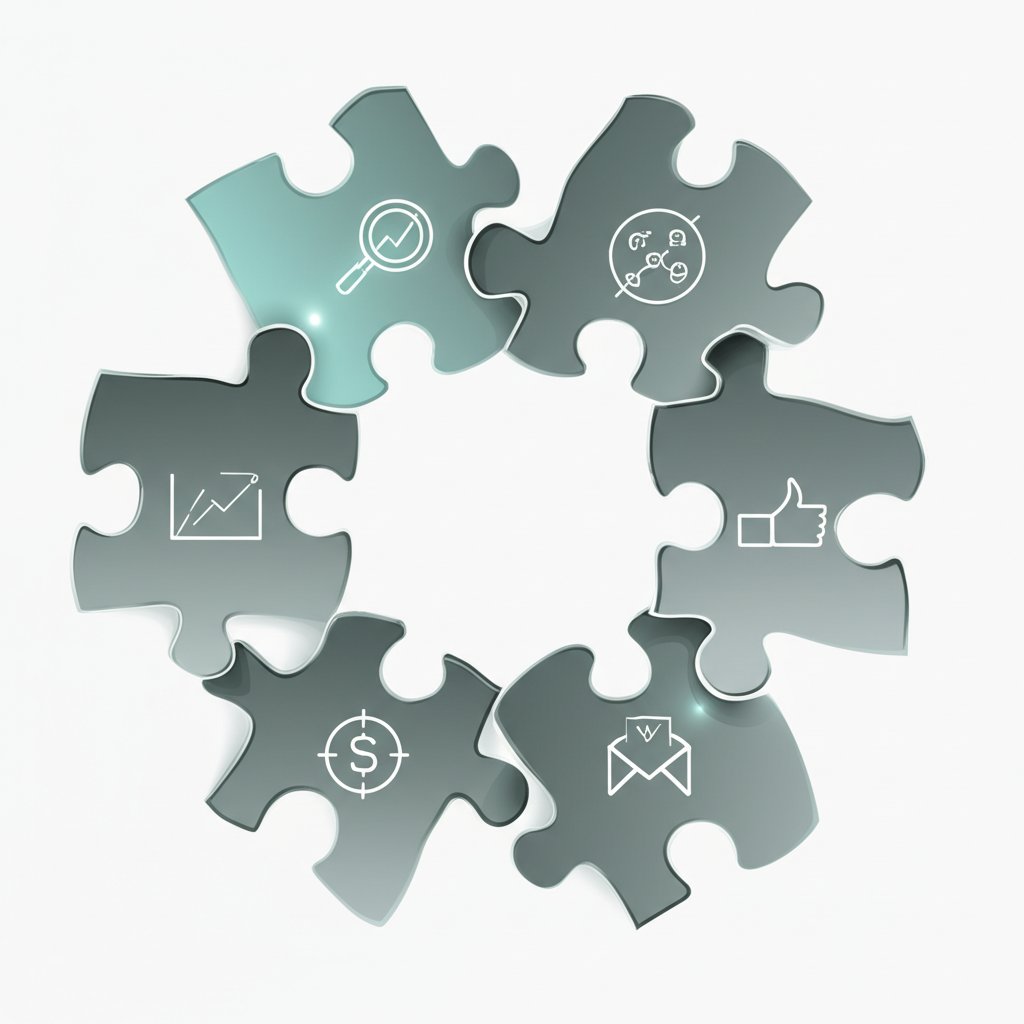
A successful integrated online marketing strategy relies on the coordinated effort of several core digital channels. Each channel has a unique role, but their true power is unlocked when they work together to amplify a unified brand message. The most common components of this framework include content marketing, SEO, paid media (PPC), social media marketing, and email marketing.
Content Marketing is the foundation of the framework. High-quality blog posts, videos, whitepapers, and case studies provide the value that attracts and engages your target audience. This content serves as the fuel for all other channels. For businesses looking to scale their content creation, utilizing advanced tools can be a game-changer. Marketers and creators can revolutionize their content workflow with platforms like BlogSpark, an AI blog post generator that transforms ideas into engaging, SEO-optimized articles, ensuring a steady supply of high-quality content for all integrated efforts.
Search Engine Optimization (SEO) ensures that your content is discoverable. By optimizing your website and content for relevant keywords, you attract organic traffic from users actively searching for solutions you provide. SEO and content marketing are deeply intertwined; great content is necessary to rank well, and SEO ensures that content reaches its intended audience. This organic visibility builds long-term authority and credibility for your brand.
Let's consider a practical example: a B2B software company launching a new feature. They would start by publishing an in-depth blog post (Content Marketing) explaining the feature's benefits. This post would be optimized with relevant keywords to rank in search results (SEO). The company would then promote the post on LinkedIn and Twitter (Social Media Marketing) to engage their existing followers. To reach a wider audience, they might run targeted PPC ads on Google and LinkedIn (Paid Media) that direct traffic to the blog post. Finally, they would announce the new feature and share the blog post with their subscribers via their newsletter (Email Marketing), nurturing leads and driving adoption. Throughout this entire process, the messaging, branding, and visual identity remain consistent, creating a powerful, integrated campaign.
| Channel | Primary Function | Key Metrics | Role in Funnel |
|---|---|---|---|
| Content Marketing | Educate, engage, and build authority. | Time on page, bounce rate, downloads. | Awareness, Consideration |
| SEO | Attract organic traffic and improve visibility. | Keyword rankings, organic traffic, backlinks. | Awareness |
| Paid Media (PPC) | Drive targeted traffic and generate leads quickly. | Click-through rate (CTR), cost per click (CPC), conversion rate. | Awareness, Conversion |
| Social Media Marketing | Build community, engage followers, and amplify content. | Engagement rate, reach, shares. | Awareness, Consideration |
| Email Marketing | Nurture leads, build relationships, and drive conversions. | Open rate, click-through rate, conversion rate. | Consideration, Conversion |
How to Build and Launch Your Integrated Online Marketing Strategy
Developing a successful integrated online marketing strategy requires a systematic, step-by-step approach. Moving from theory to practice involves careful planning, coordination across teams, and a commitment to measurement and optimization. By following a structured process, you can ensure all your marketing efforts are aligned and working towards a common goal.
- Set Clear Objectives: Before launching any campaign, define what success looks like. Your goals should be specific, measurable, achievable, relevant, and time-bound (SMART). Are you trying to increase brand awareness by 20% in six months, generate 500 new marketing qualified leads (MQLs) this quarter, or boost sales for a specific product line? Clear objectives will guide every subsequent decision in your strategy.
- Define Your Target Audience and Map the Customer Journey: A deep understanding of your ideal customer is crucial. Develop detailed buyer personas based on demographic, psychographic, and behavioral data. Once you know who you're targeting, map out their typical journey, from initial awareness to the final purchase and beyond. Identify the key touchpoints and questions they have at each stage. As HubSpot advises, defining your audience by channel can help tailor assets for maximum success.
- Choose Your Channel Mix: Based on your audience and their journey, select the most appropriate marketing channels. You don't need to be on every platform, but you do need to be where your customers are. Determine the role each channel will play in your strategy. For example, social media might be used for top-of-funnel awareness, while email marketing focuses on mid-funnel lead nurturing.
- Craft a Unified Message and Creative Theme: This is the heart of an integrated campaign. Develop a core message and a consistent visual identity that will be adapted across all your chosen channels. This includes your tagline, value proposition, color palette, typography, and imagery. The goal is to create a cohesive brand experience that is instantly recognizable, no matter where a customer encounters it.
- Execute and Coordinate: With your plan in place, it's time to launch. This requires strong project management and communication between channel managers. Ensure that all teams are aligned on the campaign timeline, messaging, and goals. One of the biggest challenges to integrated marketing is internal silos, so fostering a collaborative environment is essential for seamless execution.
- Measure and Optimize: An integrated strategy is not a 'set it and forget it' activity. Use analytics tools to track performance across all channels, focusing on both channel-specific metrics and overall campaign KPIs. Analyze the data to understand what's working and what isn't. Be prepared to iterate and optimize your campaigns in real-time to improve results and maximize your ROI.
To make this process more actionable, consider creating a simple checklist to guide your planning:
- Have we defined our SMART goals for the campaign?
- Are our buyer personas and customer journey maps up to date?
- Have we selected the right channels to reach our audience?
- Is our core message and creative theme consistent and compelling?
- Do all channel managers understand their roles and the campaign timeline?
- What cross-channel metrics will we use to measure overall success?
- How will we collect and analyze data to optimize performance?
Frequently Asked Questions About Integrated Marketing
1. What is integrated internet marketing?
Integrated internet marketing, also known as integrated online marketing, is a strategic approach that coordinates all digital marketing activities to deliver a unified message. As defined by Smart Insights, it involves integrating paid, earned, and owned media to create a seamless experience for consumers across their path to purchase. The core idea is that the combined impact of consistent messaging across channels is greater than the sum of individual, uncoordinated efforts.
2. What is integrated marketing?
Integrated marketing is the broader concept that encompasses all marketing communications, both online and offline. It is a strategy for delivering a unified, consistent message across all the channels a brand uses, including digital platforms, print advertising, public relations, and direct mail. The goal is to ensure that every touchpoint a customer has with a brand is cohesive and reinforces the same core values and messaging, thereby building stronger brand equity and trust.
3. What is IMC and what are some examples?
IMC stands for Integrated Marketing Communications. It is the process of unifying all aspects of marketing communication—such as advertising, PR, social media, and sales promotion—to work together as a unified force. A classic example is Coca-Cola's "Share a Coke" campaign, which integrated personalized packaging with social media hashtags, online content, and traditional advertising to create a global conversation. Another example is Old Spice's "The Man Your Man Could Smell Like" campaign, which used a consistent humorous tone across TV commercials, YouTube responses, and social media to successfully reposition the brand.