
TL;DR
A top-level domain (TLD) is the final segment of a domain name, located after the last dot, such as '.com' in 'example.com'. Its primary function is to help categorize websites by purpose, geographical area, or the type of organization that owns them. The most popular and widely recognized top domain name worldwide is .com, originally intended for commercial entities but now used for nearly every type of website.
What Are Top-Level Domains (TLDs)?
A top-level domain, often abbreviated as TLD, is the part of a domain name that follows the final dot. For instance, in the web address www.google.com, the TLD is .com. TLDs are a crucial component of the internet's Domain Name System (DNS), which acts as the internet's phonebook by translating human-readable domain names into machine-readable IP addresses. The TLD provides the first level of categorization for a website, signaling its general purpose or origin.
The management of these extensions is overseen by the Internet Corporation for Assigned Names and Numbers (ICANN), which coordinates the allocation of domain names and IP addresses globally. When a user types a web address into their browser, the DNS uses the TLD to help locate the correct server where the website's data is stored. This system ensures that every domain name is unique and points to a single, specific website.
Initially, only a handful of TLDs existed, each with a specific intended use. For example, .org was for organizations, and .net was for network infrastructures. Today, the landscape has expanded dramatically to include hundreds of options. Understanding TLDs is the essential first step for anyone looking to register a domain name, as the choice of extension can influence user perception, branding, and even search engine visibility.
Common examples of TLDs include:
- .com: For commercial entities.
- .org: For non-profit organizations.
- .net: For network-related services.
- .gov: For U.S. government agencies.
- .edu: For educational institutions.
- .de: A country-code TLD for Germany.
The Most Popular & Common TLDs Ranked
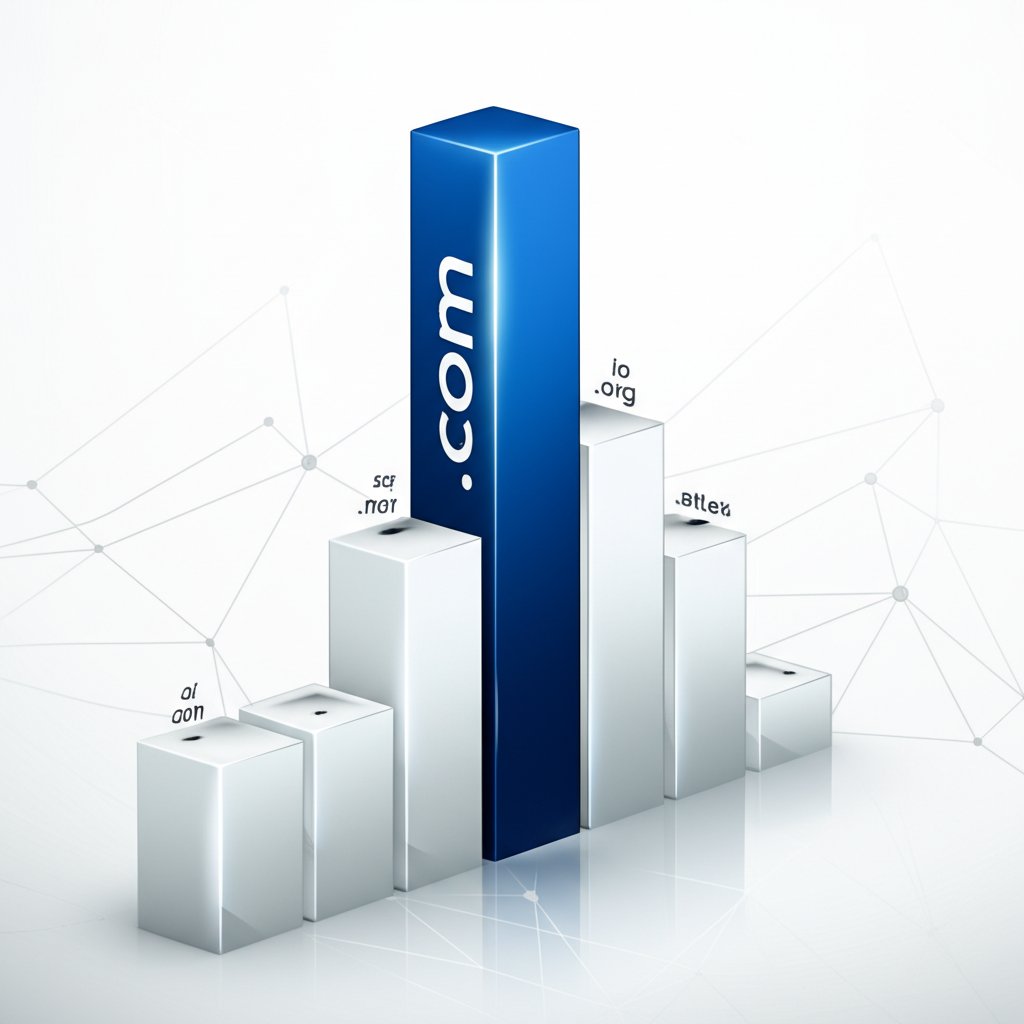
When it comes to popularity, one top-level domain stands far above the rest: .com. Originally designated for commercial websites, its early adoption and universal recognition have made it the default choice for businesses, organizations, and individuals worldwide. According to an article by HostPapa, the .com extension is used by over 43% of all websites, demonstrating its immense market dominance. This widespread trust and familiarity mean users often assume a website ends in .com, making it highly memorable.
While .com leads, several other TLDs have carved out significant niches and are widely used. Legacy domains like .org and .net remain popular due to their long history and established credibility. The .org extension is strongly associated with non-profits and community-based initiatives, conveying a sense of trust. Meanwhile, .net is a common alternative for technology and internet service companies, especially when the .com version of a domain is already taken.
Interestingly, some of the most common TLDs are country-code top-level domains (ccTLDs). These two-letter extensions correspond to specific countries or territories and are often preferred by businesses targeting a local audience. Their popularity reflects the global nature of the internet and the importance of localized content. Based on data from sources like Network Solutions, several ccTLDs rank among the most frequently registered extensions.
Below is a table comparing some of the most common top-level domains based on global registration and use.
| Rank | TLD | Type | Primary Use |
|---|---|---|---|
| 1 | .com | gTLD | Commercial / General Purpose |
| 2 | .org | gTLD | Non-profit Organizations |
| 3 | .de | ccTLD | Germany |
| 4 | .ru | ccTLD | Russia |
| 5 | .net | gTLD | Network / Technology |
| 6 | .uk | ccTLD | United Kingdom |
| 7 | .br | ccTLD | Brazil |
| 8 | .jp | ccTLD | Japan |
Choosing a popular TLD like .com offers immediate brand recognition and credibility. However, the high demand means that desired names are often unavailable. In such cases, a well-regarded ccTLD can be an excellent choice for businesses focusing on a specific geographic market, as it can improve local SEO and build trust with regional customers.
A Guide to the Different Categories of TLDs
To bring order to the vast world of domain names, top-level domains are organized into several distinct categories. Understanding these classifications helps clarify their purpose and governance. The Internet Assigned Numbers Authority (IANA), a department of ICANN, officially distinguishes between several types, as detailed in resources like Wikipedia. The primary categories you'll encounter are generic, country-code, and sponsored TLDs.
Generic Top-Level Domains (gTLDs)
This is the most common category and includes the well-known legacy domains. Originally, gTLDs were intended for specific types of entities, but most are now open for registration by anyone for any purpose. They are highly versatile and suitable for a wide range of websites, from business pages to personal blogs.
- .com: Initially for commercial websites, now the global standard.
- .net: Originally for network providers, now a popular alternative to .com.
- .org: Intended for non-profit organizations, it still carries an association of public trust.
- .info: For informational websites.
Country-Code Top-Level Domains (ccTLDs)
These two-letter domains are assigned to specific countries or territories. They are ideal for websites that want to target a local audience, as they can signal regional relevance to both users and search engines. While some ccTLDs are restricted to citizens or businesses of that country, many are open for anyone to register.
- .uk: United Kingdom
- .de: Germany
- .jp: Japan
- .ca: Canada
- .us: United States
Sponsored Top-Level Domains (sTLDs)
Sponsored TLDs are a more specialized category. Each sTLD is managed by a private organization or agency that establishes and enforces strict eligibility rules for registrants. These restrictions ensure that domains are used for their intended purpose, which adds a layer of authority and trust.
- .gov: Restricted to United States government entities.
- .edu: Limited to post-secondary educational institutions accredited in the U.S.
- .mil: Exclusively for the U.S. military.
- .int: Used by international organizations established by treaty.
The Emergence of New Top-Level Domains (New gTLDs)
For decades, the options for domain extensions were limited to a few dozen choices. However, in 2012, ICANN launched the New gTLD Program, a major initiative designed to dramatically expand the number of generic top-level domains. This expansion introduced hundreds of new, descriptive, and industry-specific TLDs, giving individuals and businesses more opportunities to create memorable and relevant web addresses. These new gTLDs range from the general (like .online) to the highly specific (like .photography or .attorney).
The primary goal of this program was to foster choice, competition, and innovation in the domain name space. With so many .com domains already registered, new gTLDs offer a fresh pool of available names. They allow brands to secure a domain that is more aligned with their identity or industry. For example, a tech startup could use .tech or .io, an e-commerce site could use .shop or .store, and a personal portfolio might use .me. This specificity can immediately communicate a website's purpose to potential visitors.
As branding becomes more specific with new gTLDs, so does content strategy. For marketers and creators looking to scale their content for these niche domains, AI-powered tools can be a game-changer. For example, platforms like BlogSpark, an AI blog post generator, help transform ideas into engaging, SEO-optimized articles in seconds, allowing teams to focus on strategy rather than just production. This synergy between a descriptive domain and targeted content can significantly enhance a brand's online presence.
However, choosing a new gTLD comes with its own set of considerations. Below is a breakdown of the advantages and disadvantages.
Pros
- Greater Availability: It's much easier to find a short, memorable, and relevant domain name.
- Brand Relevance: A TLD like .law or .art can instantly signal what your business does.
- Creative Potential: They allow for creative "domain hacks" and highly brandable names.
Cons
- Lower Public Recognition: Users are less familiar with new gTLDs and may not trust them as much as a .com domain.
- Potential for Confusion: Some users might instinctively type .com at the end of your domain name out of habit.
- Variable Pricing: Some new gTLDs can be more expensive to register and renew than traditional options.

Frequently Asked Questions
1. What are the 7 top-level domains?
The term "7 top-level domains" often refers to the original gTLDs created in the early days of the internet. These are .com, .org, .net, .int, .edu, .gov, and .mil. However, today the IANA classifies TLDs into several broader groups, including generic (gTLD), country-code (ccTLD), sponsored (sTLD), and infrastructure (.arpa) top-level domains.