

TL;DR
A keyword gap analysis is a powerful SEO process where you compare your website's keyword rankings against your competitors'. The goal is to identify valuable keywords they rank for that you don't, uncovering strategic opportunities to create new content, capture more organic traffic, and refine your overall SEO strategy. This analysis turns your competitors' success into a roadmap for your own growth.
Understanding Keyword Gap Analysis: Core Concepts and Strategic Value
At its core, a keyword gap analysis is a form of competitive intelligence specifically for SEO. It involves a systematic comparison of your domain's keyword profile with those of your key competitors. The primary objective is to pinpoint specific, relevant search terms that your competitors are successfully ranking for in search engine results, while your site is not. This process reveals the “gaps” in your keyword strategy, providing a data-driven foundation for content creation and optimization.
This method is also frequently referred to as a content gap analysis. While a keyword gap analysis focuses specifically on search terms, a content gap analysis often takes a broader view of topics and the customer journey, as noted by experts at Semrush. However, the two concepts are closely related, as keywords are the language used to find content. By identifying missing keywords, you are inherently discovering topics your audience is searching for that you haven't addressed.
The strategic value of this analysis is immense. Instead of guessing which topics might resonate with your audience, you are using your competitors' proven successes as a guide. This approach, highlighted by SEO platform BrightEdge, allows you to understand your competitors' content strategies on a deeper level. You're not just finding keywords; you're gaining insight into the themes, products, and user problems they prioritize, which helps you better position your own brand in the market.
For example, imagine you run an e-commerce store selling handmade leather bags. Your main competitor might be ranking for “how to clean a leather tote bag,” a keyword you haven't targeted. This gap represents an opportunity. By creating a comprehensive guide on that topic, you can capture relevant search traffic from users who are clearly in your target audience, even if they aren't ready to buy at that exact moment. This builds topical authority and introduces your brand to potential customers.
Ultimately, a keyword gap analysis empowers you to:
- Discover untapped keyword opportunities: Find high-value, relevant keywords you may have overlooked.
- Refine your content strategy: Make informed decisions about what new content to create and which existing content to update.
- Increase market visibility: By targeting a wider range of relevant terms, you expand your footprint in search results.
- Save time and resources: Focus your efforts on keywords that are already proven to drive traffic in your niche.
How to Perform a Keyword Gap Analysis: A Step-by-Step Guide
Conducting a keyword gap analysis is a methodical process that transforms raw data into an actionable content plan. While the specifics can vary depending on the tools you use, the fundamental steps remain consistent. Following a structured approach ensures you not only find gaps but also know how to prioritize and act on them effectively.
- Identify Your True SEO Competitors: The first step is to pinpoint who you are actually competing against in search results. These may not always be your direct business competitors. An SEO competitor is any domain that consistently ranks for the keywords you are targeting or want to target. You can identify them by searching for your primary keywords and seeing who appears on the first page, or by using SEO tools that automatically list your top organic competitors.
- Select Your Analysis Tool: Manually comparing thousands of keywords is impractical. Specialized SEO tools are essential for performing a keyword gap analysis efficiently. Platforms like Semrush, Ahrefs, and SE Ranking have dedicated features designed for this exact purpose. These tools automate the process of fetching keyword data for multiple domains and presenting it in a comparative view.
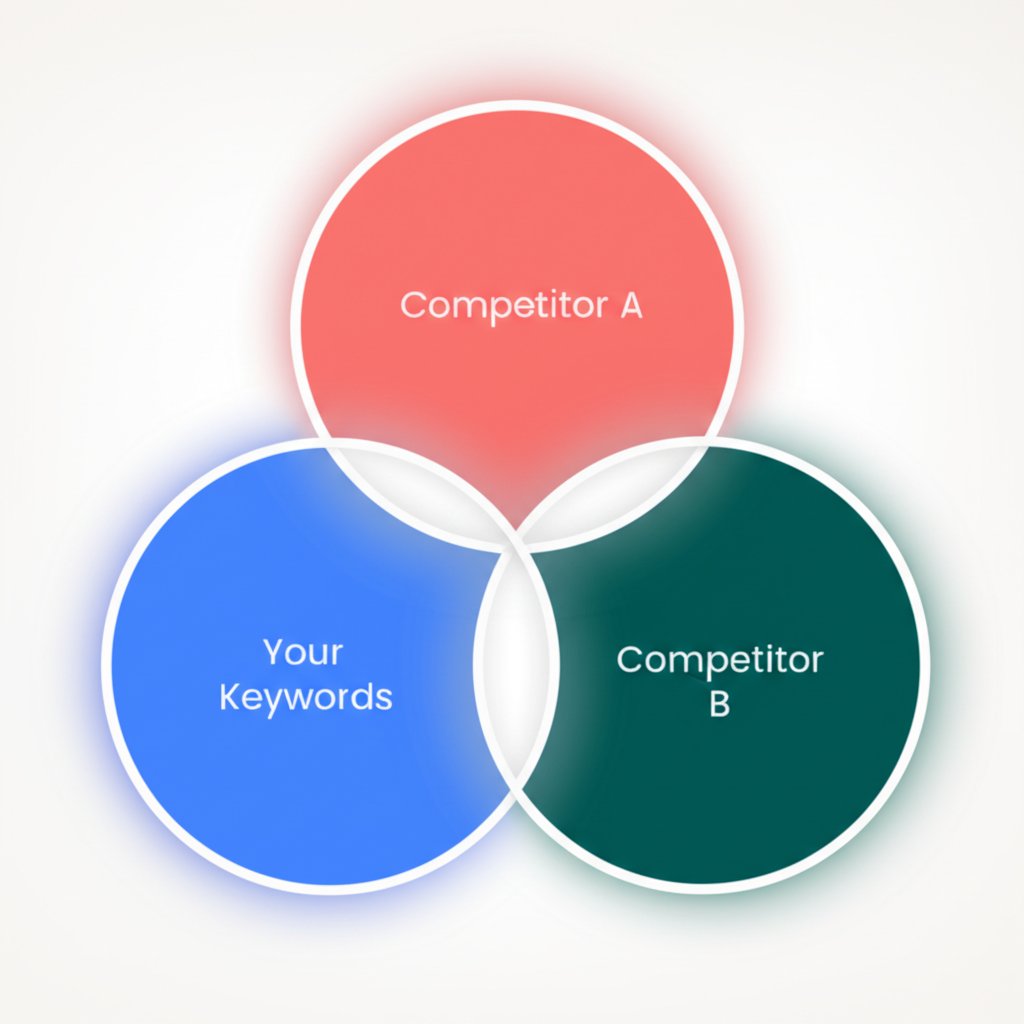
- Export and Compare Keyword Sets: Once you've chosen your tool and identified 2-4 key competitors, you'll input your domain and theirs into the tool's comparison feature. The software will generate reports showing several categories of keywords, as detailed in guides from Tuff Growth and other experts. Typically, you'll see keywords that are shared (you both rank), missing (they rank, you don't), weak (they rank higher than you), and unique (only you rank). For this analysis, the “missing” and “weak” categories are your primary focus.
- Analyze and Prioritize Opportunities: The raw export of keywords can be overwhelming. The next crucial step is to filter and prioritize this list to find the most valuable opportunities. Analyze the keywords based on several key metrics:
- Relevance: Is the keyword directly related to your products, services, or expertise?
- Search Volume: How many people are searching for this term each month?
- Keyword Difficulty (KD): How hard will it be to rank on the first page for this term?
- Search Intent: What is the user trying to accomplish with this search (informational, commercial, transactional)?
- Turn Insights into an Actionable Content Plan: The final step is to translate your prioritized list into concrete actions. For “missing” keywords, you will likely need to create new content. For “weak” keywords, the best approach is often to update and improve your existing content. Group related keywords into thematic clusters to build topical authority. This plan becomes the foundation of your content calendar. For marketers looking to scale their output, tools like BlogSpark can help transform these keyword opportunities into SEO-optimized articles quickly, streamlining the content creation workflow.
Choosing the Right Keyword Gap Analysis Tool
While the strategy behind a keyword gap analysis is universal, the execution heavily relies on the capabilities of your chosen SEO tool. Specialized platforms are non-negotiable for this task, as they automate the immense data collection and comparison required. Different tools offer unique interfaces and data points, so selecting the right one depends on your budget, workflow, and specific analytical needs.
The primary function of any keyword gap tool is to compare your domain against competitors and identify keywords you're missing out on. They streamline a process that would be nearly impossible to perform manually at any meaningful scale. Leading platforms have developed sophisticated features to not only show you the gaps but also help you prioritize them with metrics like search volume, keyword difficulty, and estimated traffic value. Below is a comparison of some of the most popular tools in the industry.
| Tool | Key Feature Name | Best For... |
|---|---|---|
| Semrush | Keyword Gap | All-around competitor analysis, offering a clear visual overlap of keywords and robust filtering for missing, weak, and untapped opportunities. |
| Ahrefs | Content Gap (in Site Explorer) | Identifying content-level gaps and finding keywords a competitor's specific page ranks for that yours doesn't, as detailed in their guide on content gap analysis. |
| SE Ranking | Competitor Comparison | Visualizing keyword overlap and finding missing keywords with detailed metrics, integrated directly into a comprehensive competitor research workflow. |
| Moz Pro | Keyword Gap | Pinpointing ranking opportunities and understanding competitor overlap within a user-friendly interface focused on actionable SEO insights. |
When selecting a tool, consider your existing SEO toolkit. If your team is already invested in one of these platforms for rank tracking or site audits, using its built-in gap analysis feature is the most efficient choice. For those starting fresh, consider a free trial to compare the user interface and data visualization of each. Ultimately, the best tool is one that provides clear, actionable data that your team can easily interpret and convert into a successful content strategy.
Frequently Asked Questions
1. What is an example of keyword analysis?
An example of keyword analysis is a business that sells project management software discovering through a keyword gap analysis that its competitor ranks highly for the term "best software for remote teams." The business realizes it doesn't have content targeting this specific need. The analysis would involve evaluating the search volume (high), keyword difficulty (medium), and intent (commercial) of that keyword. Based on this analysis, the business would decide to create a detailed comparison article titled "The Best Project Management Software for Remote Teams" to fill this gap and capture relevant traffic.
2. Can ChatGPT do a gap analysis?
ChatGPT and other large language models (LLMs) cannot perform a true keyword gap analysis on their own because they do not have real-time access to a comprehensive index of the web or live search engine ranking data. A proper analysis requires a specialized SEO tool (like Semrush or Ahrefs) to crawl and compare the keyword profiles of different domains. However, once you have exported the keyword data from such a tool, you can use ChatGPT to help you analyze the list, group keywords into thematic clusters, generate content ideas, or create outlines based on the identified gaps.
3. What is keyword gap analysis in PPC?
Keyword gap analysis in PPC (Pay-Per-Click) advertising follows the same core principle as in SEO but is applied to paid search campaigns. Instead of comparing organic keyword rankings, you compare the keywords you are bidding on in platforms like Google Ads against the keywords your competitors are bidding on. The goal is to find profitable keywords they are using to drive traffic and conversions that you have overlooked in your own campaigns. This helps you discover new ad groups, refine your bidding strategy, and capture a larger share of the paid search market.