

TL;DR
E-E-A-T stands for Experience, Expertise, Authoritativeness, and Trustworthiness. It is a framework detailed in Google's Search Quality Rater Guidelines, which are used by human reviewers to assess the quality of search results. While not a direct ranking factor, E-E-A-T represents the essential qualities that Google's algorithms are designed to identify and reward, particularly for content that could impact a person's well-being, known as "Your Money or Your Life" (YMYL) topics.
The Core Concept: What Is Google E-E-A-T?
E-E-A-T is a foundational concept in modern SEO that helps content creators understand what Google considers high-quality. Originally known as E-A-T (Expertise, Authoritativeness, Trustworthiness), Google added 'Experience' to the framework in December 2022 to emphasize the value of first-hand knowledge. This addition signals a clear preference for content created by individuals who have direct, real-life involvement with the subject matter.
It's crucial to understand that E-E-A-T is not a specific algorithm or a score that Google assigns to your website. Instead, it is a conceptual framework used by human quality raters to provide feedback on Google's search algorithms. As Google states in its documentation, its systems use a mix of factors that can identify content with good E-E-A-T. Therefore, aligning your content with these principles is a way of creating the helpful, reliable, people-first content that Google aims to prioritize in its search results.
The evolution from E-A-T to E-E-A-T underscores Google's commitment to fighting misinformation and low-quality content. By focusing on these four pillars, you are not just optimizing for a search engine; you are building a foundation of credibility and value for your audience. This is especially critical for YMYL topics—such as health, finance, and safety—where inaccurate information can cause significant harm. For these subjects, a high level of E-E-A-T is non-negotiable.
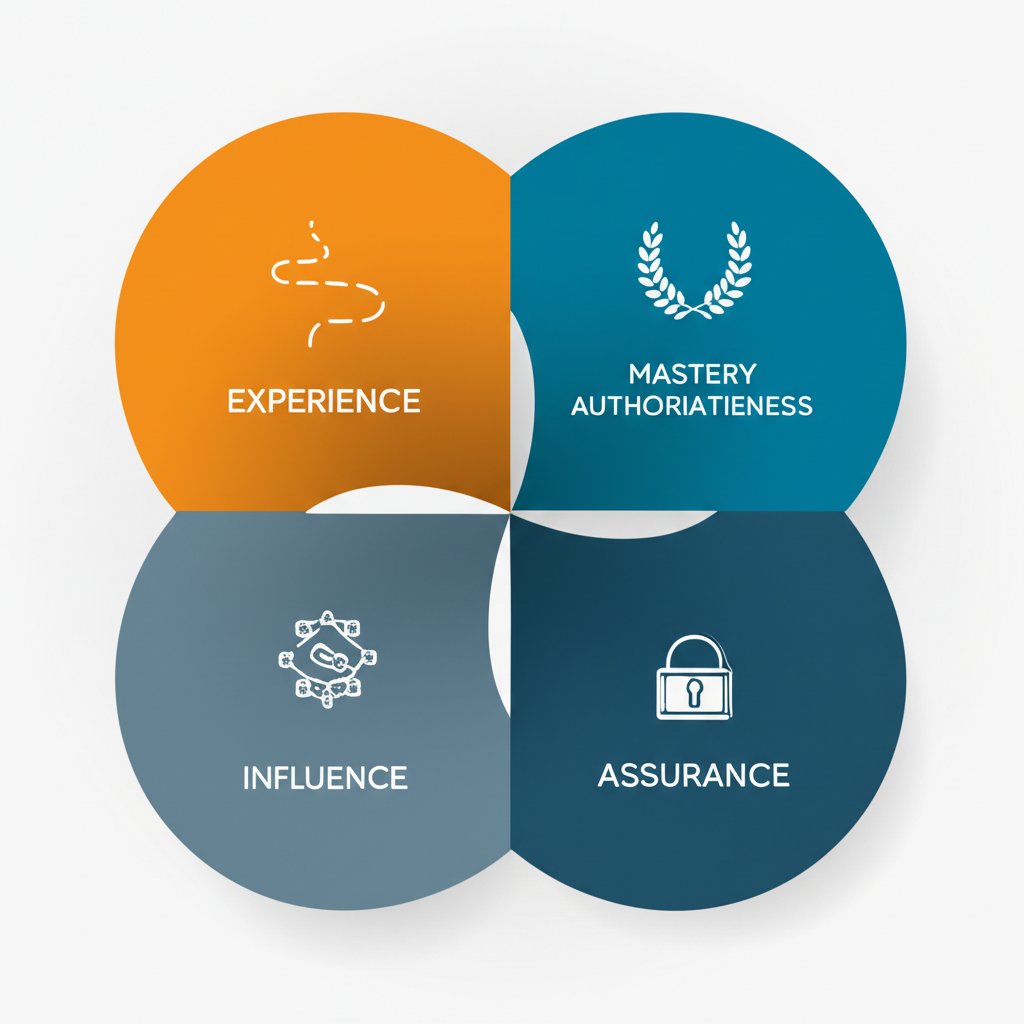
Deconstructing E-E-A-T: A Letter-by-Letter Breakdown
To fully grasp the E-E-A-T framework, it's essential to understand each of its four components. While they are interconnected, each pillar represents a distinct aspect of content quality that you must demonstrate to both users and search engines.
Experience
Experience refers to the content creator's firsthand, real-world involvement with the topic. This was the newest addition to the framework, highlighting the value of authentic, lived-in knowledge. For example, a product review is far more valuable when written by someone who has actually used the product, complete with original photos and personal insights. Similarly, travel advice from someone who has visited the destination carries more weight than a summary of information found elsewhere.
To demonstrate experience, you should focus on providing unique perspectives that can only come from direct engagement. This can include sharing personal stories, case studies, or original photos and videos. The goal is to show, not just tell, that you have real-life familiarity with your subject. This builds a strong connection with your audience, who are often seeking authentic insights over generic advice.
Expertise
Expertise evaluates the creator's level of skill and deep knowledge in their field. For YMYL topics, this often means formal credentials, such as a medical degree for health advice or certification for financial guidance. However, for many other topics, expertise can be demonstrated through a deep and comprehensive understanding of the subject. This is often referred to as "everyday expertise."
Demonstrating expertise involves creating content that is accurate, well-researched, and comprehensive. You can showcase expertise by including author bios that detail qualifications, linking to authoritative sources, and consistently publishing in-depth content on a specific niche. According to Semrush, the level of expertise required depends on the topic; sometimes users want advice from a certified professional, while other times they prefer tips from a peer who has successfully navigated the same problem.
Authoritativeness
Authoritativeness is about your reputation, particularly among other experts and influencers in your industry. It's a measure of how recognized you are as a go-to source for a specific topic. While expertise is about what you know, authoritativeness is about how others perceive your knowledge and standing.
A primary way Google gauges authoritativeness is through backlinks and mentions from other reputable websites. When other authoritative sites link to your content, it acts as a vote of confidence in your credibility. Building this authority involves activities like digital PR, publishing original research that others cite, guest posting on respected industry blogs, and earning positive mentions from industry leaders. A strong backlink profile from relevant, high-quality domains is a powerful signal of authoritativeness.
Trustworthiness
Trust is the most critical component of the E-E-A-T framework. As Google's guidelines state, an untrustworthy page has low E-E-A-T, no matter how experienced, expert, or authoritative it may seem. Trust encompasses the accuracy of your content, the security of your website, and the transparency of your operations. It is the culmination of the other three pillars.
To build trust, ensure your website is secure with HTTPS, provide clear contact information, and be transparent about who is creating the content. For YMYL content, citing credible sources and having information reviewed by qualified experts is essential. Displaying genuine customer reviews, having clear privacy policies, and ensuring your content is factually accurate and up-to-date are all crucial elements in establishing and maintaining user trust.
| Component | Definition | How to Demonstrate |
|---|---|---|
| Experience | First-hand, real-life involvement with the topic. | Include original photos/videos, personal anecdotes, case studies, and unique insights from direct use or involvement. |
| Expertise | Demonstrable skill and deep knowledge in the field. | Showcase author credentials, publish in-depth research, provide comprehensive content, and cite verifiable facts. |
| Authoritativeness | Reputation as a recognized, go-to source in your industry. | Earn backlinks from reputable sites, get positive mentions from industry leaders, and build a strong brand reputation. |
| Trustworthiness | The accuracy, safety, and reliability of your site and content. | Use HTTPS, provide clear contact info, cite sources, display user reviews, and ensure content is factually accurate. |
Practical Strategies: How to Improve Your Website's E-E-A-T
Improving your website's E-E-A-T is an ongoing process of demonstrating credibility and building a strong reputation. It requires a multi-faceted approach that touches everything from content creation to site management. Here are actionable steps you can take to enhance your E-E-A-T signals.
- Showcase Who Is Behind Your ContentTransparency is key to building trust. Clearly identify the authors of your content with detailed author biographies that highlight their experience and expertise. Link to their social media profiles or personal websites. For your overall site, an “About Us” page that tells your story and introduces your team can help users connect with your brand. As Google's own guide on creating helpful content suggests, it should be self-evident to visitors who authored your content.
- Create High-Quality, People-First ContentFocus on creating content that genuinely helps your audience. This means going beyond summarizing what others have said and providing original insights, in-depth analysis, or firsthand experiences. Conduct original research, create case studies, and provide unique data that others will want to reference and link to. For marketers looking to scale this process, AI tools can assist in research and drafting, but human oversight is critical. For instance, platforms like BlogSpark can help generate SEO-optimized article drafts, which your team's experts can then infuse with their unique experience and insights to ensure the final product meets E-E-A-T standards.
- Build Your Brand's Authority Off-SiteYour reputation extends beyond your own website. Actively work on building your authority within your niche by earning high-quality backlinks from respected sites. Engage in digital PR to get mentions in industry publications, participate in podcasts, and speak at events. According to Ahrefs, these off-site signals, like links and mentions, are what Google largely uses as a proxy to measure E-E-A-T.
- Maintain a Professional and Secure WebsiteTechnical details matter for trustworthiness. Ensure your website is secure with an HTTPS certificate. Your site should be easy to navigate, mobile-friendly, and provide clear contact information, including a physical address and phone number if applicable. Make sure your privacy policy and terms of service are easy to find. These elements signal that you are a legitimate and professional operation.
- Leverage User-Generated Content (UGC)Incorporate genuine customer reviews, testimonials, and case studies on your site. UGC serves as social proof and demonstrates that real people trust and value your products or services. For example, an e-commerce site can build immense trust by featuring detailed product reviews with photos and videos from actual customers.
- Regularly Update and Fact-Check Your ContentE-E-A-T is not a one-time achievement. Keep your content, especially on YMYL topics, up-to-date with the latest information. Implement a process for regular content audits to identify and refresh or remove outdated pages. Citing reputable sources and having experts review your content can further bolster its accuracy and trustworthiness. According to Moz, regularly updating content to reflect the latest developments is a key part of improving E-E-A-T.
Frequently Asked Questions About E-E-A-T
1. What is an example of E-E-A-T in SEO?
A great example of E-E-A-T in action is a detailed medical article about managing diabetes. The article would be written or reviewed by a certified endocrinologist (Expertise), published on a well-respected health site like the Mayo Clinic (Authoritativeness), include personal stories from patients who have successfully managed the condition (Experience), and cite scientific studies while providing clear information about the site's editorial policies (Trustworthiness).
2. Is Google E-E-A-T still relevant?
Yes, E-E-A-T is more relevant than ever. Google continues to refine its algorithms to prioritize helpful, reliable, and people-first content. The addition of 'Experience' in 2022 and the integration of the Helpful Content System into its core ranking algorithm show that the principles of E-E-A-T are central to Google's vision for search quality.
3. What does E-E-A-T stand for?
E-E-A-T is an acronym that stands for Experience, Expertise, Authoritativeness, and Trustworthiness. These are the four key characteristics that Google's quality raters use to evaluate the overall quality and credibility of a webpage and its content.
4. What are the four main types of SEO?
The four main types of SEO are On-Page SEO (optimizing individual page content), Off-Page SEO (building authority through backlinks and mentions), Technical SEO (ensuring a site is crawlable and performs well), and Local SEO (optimizing for location-based searches). The principles of E-E-A-T are most directly related to on-page and off-page SEO, as they involve creating high-quality content and building a strong reputation.