

TL;DR
In Ahrefs, KD stands for Keyword Difficulty. It's an SEO metric that scores a keyword on a 0-100 scale to estimate how hard it is to rank in the top 10 search results on Google. The score is primarily calculated by analyzing the number and quality of backlinks pointing to the pages that currently rank on the first page. A higher KD score means you'll likely need more high-quality backlinks to compete.
What is Ahrefs Keyword Difficulty (KD)? A Detailed Definition
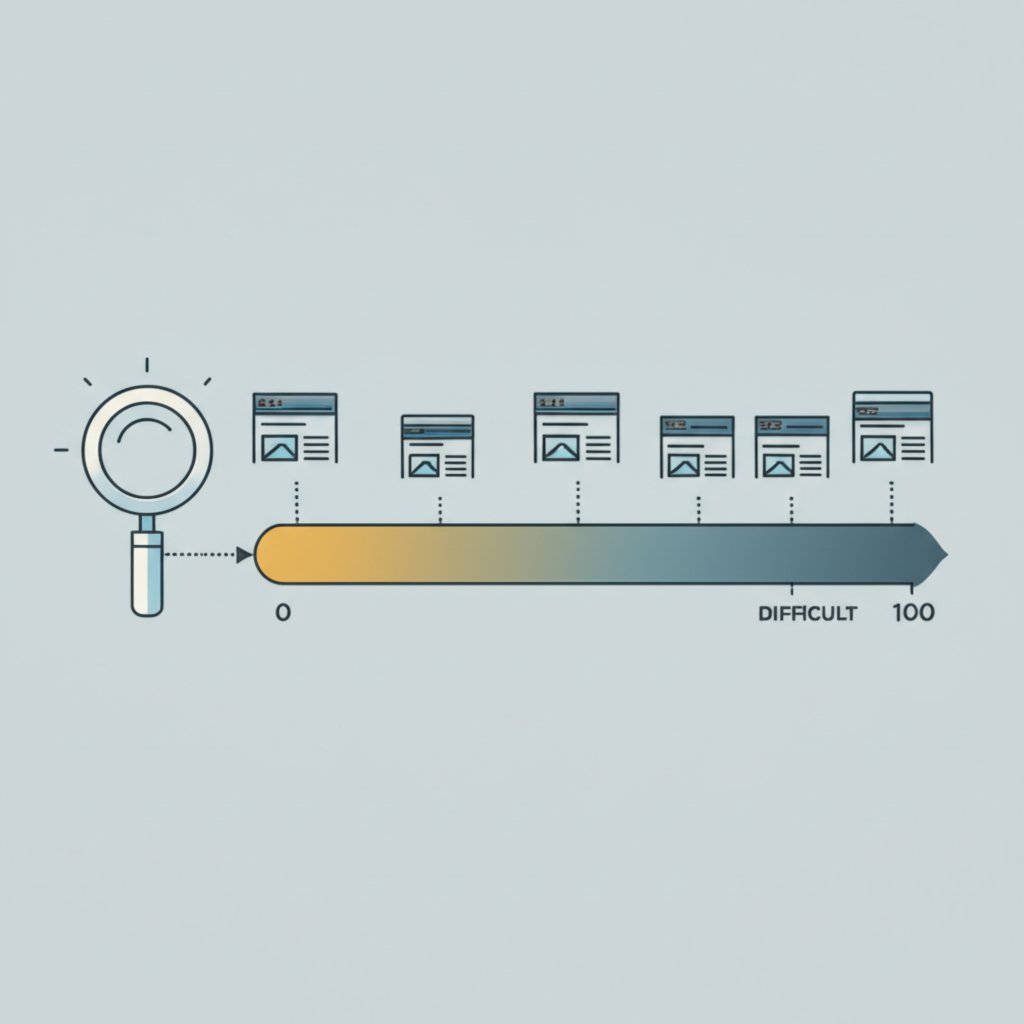
Ahrefs Keyword Difficulty (KD) is a proprietary metric designed to give SEO professionals and marketers a quick assessment of a keyword's ranking challenge. It provides a score from 0 to 100, where a lower score indicates less competition and an easier path to the first page of Google, while a higher score signifies intense competition. This metric is a cornerstone of the Ahrefs Keywords Explorer tool, helping users prioritize their efforts and resources effectively.
The primary purpose of the KD score is to streamline the keyword research process. Instead of manually analyzing the search engine results page (SERP) for every potential keyword, users can use the KD score as a first-pass filter. It helps identify promising, low-competition keywords that a website, especially a new one with limited authority, can realistically rank for. For instance, a keyword with a KD of 5 is significantly more attainable than one with a KD of 85, which would require a massive backlink acquisition effort.
It's crucial to understand that the KD score from Ahrefs is not interchangeable with difficulty scores from other SEO tools. Each platform uses its own algorithm and data points, leading to different scores for the same keyword. Ahrefs' KD focuses specifically on the backlink profiles of top-ranking pages, making it a powerful indicator of off-page SEO requirements. While it's a vital metric, it should be used as a guide rather than an absolute rule, complementing a broader analysis of the SERP.
How Ahrefs Calculates Its KD Score
The calculation for Ahrefs' Keyword Difficulty score is intentionally straightforward and transparent, focusing on what is arguably one of the most influential ranking factors: backlinks. Ahrefs calculates KD by analyzing the quantity and quality of backlinks pointing to the top 10 organic search results for a specific keyword. In essence, it measures the collective backlink strength of the pages that have already proven they can rank. The more referring domains (unique websites) linking to these top pages, the higher the KD score will be.
To illustrate, imagine two keywords. For 'Keyword A', the top 10 ranking pages have an average of only 15 referring domains each. Ahrefs would assign this a low KD score. In contrast, for 'Keyword B', the top 10 pages each have an average of 200 referring domains from authoritative sites. This keyword would receive a very high KD score, signaling that a new page would need a formidable backlink profile to even enter the competition.
However, it's important to recognize the limitations of this methodology. Ahrefs' KD score does not directly account for other critical ranking factors such as on-page SEO, content quality, site speed, user experience, or a website's overall domain authority. This is a deliberate choice to keep the metric clear and actionable. Therefore, SEO professionals should treat the KD score as a measure of 'backlink difficulty' and use it as a starting point for a more comprehensive manual SERP analysis. It tells you how strong your off-page SEO game needs to be, but not the whole story of what it takes to rank.
Applying Keyword Difficulty in Your SEO Strategy
Understanding the Ahrefs KD score is only half the battle; applying it strategically is what drives results. The primary use of KD is to prioritize keyword targets and allocate SEO resources efficiently. A well-defined strategy based on KD can help you secure quicker wins while building the authority needed to tackle more competitive terms over time. For new or low-authority websites, focusing on low-KD keywords is a fundamental tactic to gain initial traction and organic traffic.
Here is a practical workflow for incorporating KD into your keyword research:
- Generate Keyword Ideas: Start by brainstorming a broad list of relevant keywords for your niche. Tools designed for this, such as AI-powered platforms, can significantly speed up this process. For instance, marketers looking to scale their output often turn to solutions like BlogSpark, which can help discover keyword opportunities and generate content frameworks.
- Analyze KD Scores: Input your keyword list into Ahrefs' Keywords Explorer to get the KD score for each term. This provides an immediate overview of the competitive landscape.
- Filter by Feasibility: Filter your list to a KD range that aligns with your website's current authority. A new site might target keywords with a KD of 0-15, while an established site with a strong backlink profile could confidently pursue keywords in the 40-60 range.
- Prioritize High-Value Targets: From your filtered list, prioritize keywords that offer the best balance of achievable KD, sufficient search volume, and strong relevance to your business goals. A keyword with a KD of 10 and 500 monthly searches is often a better initial target than one with a KD of 50 and 5,000 searches.
To better visualize the strategic trade-offs, consider this comparison:
| Strategy Focus | Typical KD Range | Pros | Cons |
|---|---|---|---|
| Low-KD Keywords | 0-20 | - Faster ranking potential- Requires fewer backlinks- Builds topical authority quickly | - Lower search volume per keyword- May require more content pieces for significant traffic |
| High-KD Keywords | 50+ | - High potential traffic per keyword- Often targets high-value commercial intent | - Requires significant time and resources for link building- Highly competitive and difficult to rank for |
Ultimately, a successful long-term strategy involves a blended approach. Start by securing rankings for low-KD keywords to build momentum. As your site's authority grows from accumulating backlinks and publishing quality content, you can gradually begin to target more competitive, higher-KD terms. This methodical approach ensures sustainable growth and a strong return on your SEO investment.
Frequently Asked Questions
1. What is Ahrefs KD?
Ahrefs KD, or Keyword Difficulty, is a score from 0 to 100 that estimates how hard it will be to rank on the first page of Google for a keyword. It is primarily based on the number of websites linking to the current top 10 search results.
2. What is a good KD score in Ahrefs?
A 'good' KD score is relative to your website's own authority. For new websites, a good score to target is typically below 20. For more established websites with strong backlink profiles, targeting keywords with scores of 40, 50, or even higher may be feasible.
3. Does Keyword Difficulty consider on-page SEO?
No, Ahrefs' Keyword Difficulty score does not take on-page SEO factors like content quality, keyword usage, or site speed into account. It is almost exclusively a measure of the backlink strength of the top-ranking pages and should be used alongside manual SERP analysis.