
TL;DR
Finding the best AI for writing non-fiction books involves selecting a tool that complements your workflow, not one that replaces you. Top contenders like ChatGPT, Claude 3, and Sudowrite excel at assisting with research, generating detailed outlines, and drafting initial chapters. The key is to use these platforms as powerful collaborators to overcome writer's block and accelerate your process while you provide the essential expertise, voice, and factual accuracy.
Understanding AI's Role in Non-Fiction Writing: Is It Right for You?
The sudden rise of artificial intelligence has left many authors wondering: can and should I use AI to write my non-fiction book? The answer isn't a simple yes or no. Instead, it's about understanding AI's capabilities and limitations and reframing its role from a ghostwriter to a highly efficient research assistant. AI writing tools are designed to generate human-like text based on prompts, making them incredibly useful for brainstorming, structuring ideas, and producing first drafts. However, they are not a substitute for your unique expertise and perspective, which are the heart of any compelling non-fiction work.
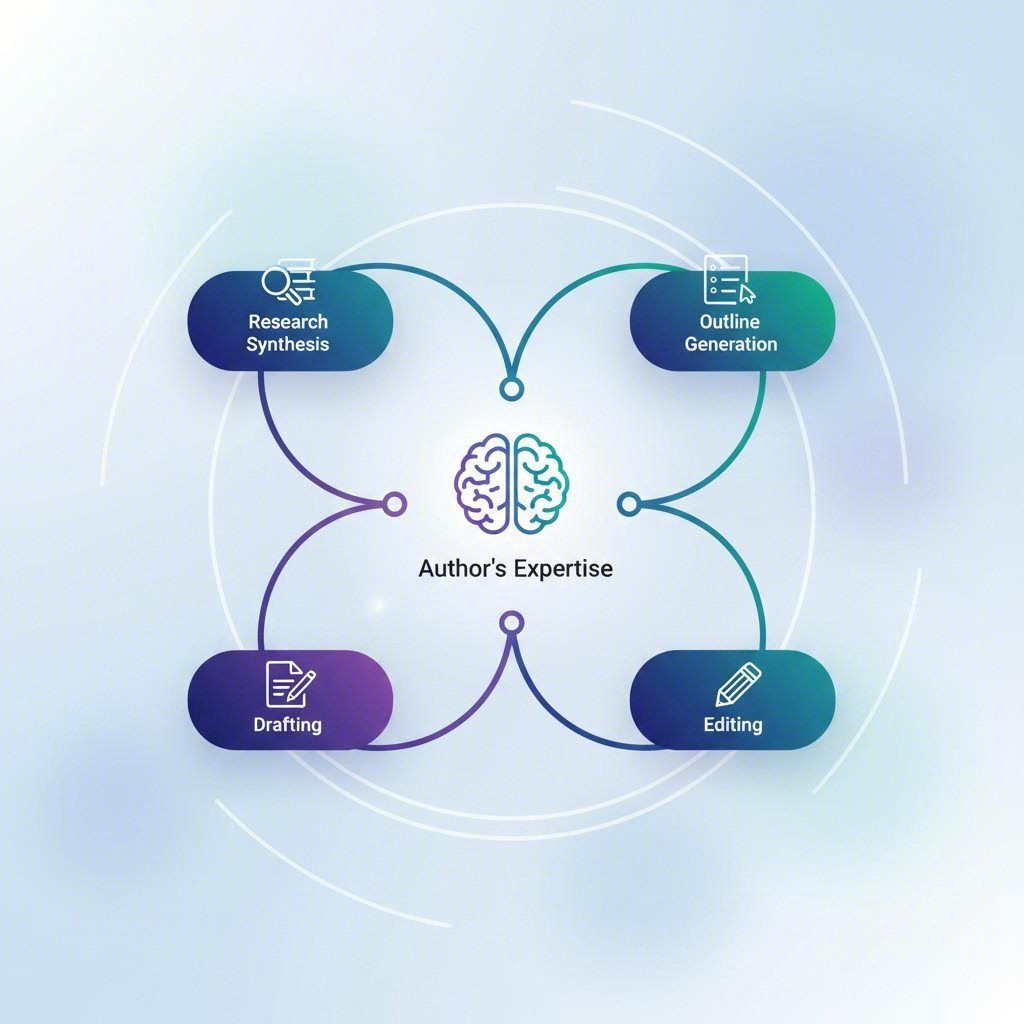
Viewing AI as a partner is the most effective approach. These tools can dramatically speed up the tedious parts of the writing process. For example, an AI can synthesize research from various sources, create a comprehensive chapter-by-chapter outline, or rephrase a clunky paragraph for better clarity. This frees you up to focus on higher-level tasks: weaving in personal anecdotes, providing deep analysis, and ensuring the narrative voice is authentically yours. As Carla King of the Nonfiction Authors Association notes, experts can use AI for outlines and drafts, then add their own style, experience, and opinion to the generated text.
However, it's crucial to be aware of the potential downsides. AI models can sometimes generate factually incorrect information or present biased viewpoints based on their training data. They lack true understanding and personal experience, which can result in generic or soulless prose if left unedited. Therefore, the author's role becomes that of a diligent editor and fact-checker. You must verify every claim, infuse the text with your voice, and ensure the final manuscript delivers on its promise to the reader. Ethical considerations, such as disclosing the use of AI to readers (especially under platforms like Amazon KDP), are also becoming increasingly important for maintaining transparency and trust.
| Pros | Cons |
|---|---|
| Increased Efficiency: Drastically reduces time spent on research, outlining, and drafting. | Factual Inaccuracies: AI can invent facts, statistics, and sources that require verification. |
| Overcoming Writer's Block: Helps generate ideas and initial text to get you started. | Generic Content: Output can lack a unique voice, personality, and emotional depth. |
| Structural Assistance: Excellent for creating logical outlines and structuring complex arguments. | Potential for Bias: AI can reflect biases present in its training data. |
| Content Repurposing: Quickly summarizes chapters for marketing copy, social media posts, or blog articles. | Requires Skillful Prompting: The quality of the output depends heavily on the quality of the input. |
The Top AI Writing Tools for Non-Fiction Authors
Choosing the right AI tool depends on your specific needs, from long-form drafting to marketing copy. While many platforms exist, a few stand out for their features tailored to authors. These tools are best used as assistants, helping you structure and generate content that you will then refine with your expertise. Here is a comparison of some of the leading options available to non-fiction writers.
1. ChatGPT and Claude 3 (Best General-Purpose Assistants)
Overview: ChatGPT (from OpenAI) and Claude 3 (from Anthropic) are powerful, conversational AI chatbots that excel at a wide range of tasks. They are not specialized book-writing software but serve as incredibly versatile assistants for research, brainstorming, outlining, and drafting.
Key Features: Their strength lies in natural language understanding. You can have a detailed conversation to refine an outline, ask them to summarize uploaded research documents, or generate chapter drafts based on specific instructions. Claude is often praised for its more natural-sounding prose and large context window, which allows it to analyze entire manuscripts for consistency.
- Pros: Highly flexible, excellent for research and outlining, strong conversational abilities for refining ideas.
- Cons: Can produce generic text, requires careful fact-checking, not specifically designed with book-writing features like character or research databases.
Best for: Authors who need a powerful, all-around assistant for every stage of the writing process, from ideation to final polishing.
2. Sudowrite (Best for Creative Prose and Brainstorming)
Overview: While primarily marketed to fiction authors, Sudowrite's features are incredibly effective for creative or narrative non-fiction, such as memoirs and biographies. It's designed to help enhance your writing with more descriptive and engaging language.
Key Features: Tools like "Describe" can enrich your descriptions of settings or people, while "Rewrite" offers multiple ways to rephrase sentences to be more impactful. Its "Brainstorm" feature can generate ideas, metaphors, or chapter titles. As noted in a review on Creativindie, it can write non-fiction with an excellent tone and style, though it may require editing to remove repetition.
- Pros: Excellent for enhancing prose, great for brainstorming and overcoming writer's block, user-friendly interface.
- Cons: More focused on creative writing than technical or academic non-fiction, can sometimes produce overly flowery language.
Best for: Authors of memoirs, narrative non-fiction, or any writer looking to improve the literary quality of their prose.
3. Novelcrafter (Best for Organization and Long-Form Projects)
Overview: Novelcrafter is a comprehensive writing platform that integrates AI into a structured environment built for long-form projects. Though its name suggests fiction, its organizational capabilities are perfectly suited for complex non-fiction books.
Key Features: Its standout feature is the "Codex," a database where you can store all your research, notes, interviews, and key concepts. This information can then be easily referenced by the AI when drafting chapters, ensuring consistency and accuracy. This makes it ideal for managing large amounts of information, a common challenge in non-fiction writing.
- Pros: Superior organizational tools for research, highly flexible and customizable, integrates with various AI models.
- Cons: Has a steeper learning curve, requires some setup to adapt its features for non-fiction.
Best for: Authors writing research-heavy books, historical accounts, or any project that requires meticulous organization of sources and data.
4. QuickWrite (Best for Author-Specific Tasks and Marketing)
Overview: QuickWrite is an AI tool designed specifically for authors, offering dedicated modules for both fiction and non-fiction tasks, as well as book marketing. This focus makes it a practical, all-in-one solution.
Key Features: Beyond drafting, you can use it to brainstorm book titles, generate book descriptions for Amazon, write query letters, and create promotional content like blog posts and social media updates. One review highlighted its ability to turn an outline into a blog post draft in about 15 minutes, saving hours of work.
- Pros: Tailored specifically for author needs, includes valuable marketing tools, easy to use with clear task sections.
- Cons: AI writing quality may be less sophisticated for long-form prose compared to general models like Claude or GPT-4.
Best for: Authors looking for a single tool to assist with both the writing and marketing phases of their book project.
A Step-by-Step Guide: How to Write a Non-Fiction Book with AI
Using AI effectively is about having a strategic process. Instead of simply asking an AI to "write a book," you should guide it through a structured workflow, treating it as a collaborator at each stage. This ensures the final product is coherent, accurate, and reflects your unique expertise. The key, as outlined by experts at Grammar Factory, is to do the upfront strategic work yourself and use AI tactically with specific, context-rich prompts.
1. Topic Validation and Research
Before you write a single word, use AI to act as your research assistant. Validate your book idea by analyzing its market potential. Use prompts to explore related subtopics, identify your target audience's pain points, and discover existing books in your niche. The AI can quickly summarize articles, academic papers, or search results to give you a broad overview of the subject matter.
Example Prompt: "I want to write a non-fiction book about the impact of remote work on mental health for young professionals. What are the key themes, controversies, and common questions people have on this topic? List 10 potential chapter ideas."
2. Detailed Outlining
Once your research is complete, a detailed outline is your book's blueprint. This is where AI truly shines. Feed your main topic and research findings into the AI and ask it to generate a comprehensive, chapter-by-chapter outline. Don't stop there. Refine it by asking for sub-bullets for each chapter, including key arguments, case studies to include, and a logical flow of ideas.
Example Prompt: "Create a detailed 12-chapter outline for a book on sustainable urban gardening for beginners. For each chapter, include three to five bullet points covering the main concepts to discuss. Ensure the structure flows from basic principles to advanced techniques."
3. Chapter Drafting
With a solid outline, you can now use AI to draft individual sections or chapters. The best approach is to use "micro-prompts," focusing on one small section at a time. Provide the AI with context from your outline and any specific anecdotes, data, or key points you want to include. This gives you a solid first draft that you can then edit, expand, and infuse with your personal voice. Remember, this output is a starting point, not the final product.
Example Prompt: "Using the outline provided, write a 500-word introduction for Chapter 3: 'Choosing the Right Soil.' Explain the importance of soil composition, define the terms loam, clay, and sand, and briefly introduce the concept of composting."
4. Editing and Polishing
After generating your draft, the human element becomes paramount. Your job is to edit rigorously. Fact-check every statistic and claim. Rewrite sentences to match your unique authorial voice. Add personal stories, expert analysis, and deeper insights that an AI cannot create. Many authors also use AI during this stage for tasks like improving sentence clarity, checking for grammatical errors, or even suggesting alternative phrasing. This author-AI partnership ensures a final manuscript that is both efficiently produced and authentically yours.
As you near the publishing phase, consider how to promote your work. For creating supplementary materials like blog posts or social media content to build an audience, specialized tools can be invaluable. For instance, if you're facing content creation bottlenecks, BlogSpark's advanced AI blog writer can transform your book's core ideas into engaging, SEO-optimized articles, helping you scale your marketing efforts effortlessly.

From Idea to Manuscript: Your Next Steps with AI
Embracing AI in your non-fiction writing process is not about surrendering your creativity; it's about augmenting it. The best AI tools act as tireless assistants that can handle the heavy lifting of research, outlining, and initial drafting, allowing you to focus on what truly matters: your expertise, your voice, and the unique value you bring to your readers. By following a structured approach—from validating your topic to meticulously editing the final draft—you can harness this technology to write a better book, faster.
The journey from a promising idea to a published non-fiction book is a marathon, but with the right AI partner, you can navigate it more efficiently than ever before. The key is to remain the author and expert in the driver's seat, using these powerful tools to accelerate your progress without sacrificing quality or authenticity. Start by experimenting with a few of the recommended platforms, find the one that best fits your workflow, and begin building your next manuscript with confidence.
Frequently Asked Questions About AI Book Writing
1. Which is the best AI for writing books?
There is no single "best" AI for writing books, as the ideal choice depends on the author's specific needs. For general-purpose research, outlining, and drafting, powerful chatbots like ChatGPT and Claude 3 are excellent choices. For authors who need help enhancing their prose, especially in narrative non-fiction, Sudowrite is a leading option. For those writing complex, research-heavy books, Novelcrafter provides superior organizational tools to manage sources and notes effectively.
2. Is it a good idea to write a book using AI?
Yes, it can be a very good idea to use AI as a tool to assist in writing a book, provided you use it strategically. AI is exceptionally helpful for overcoming writer's block, speeding up research, creating structured outlines, and generating first drafts. This allows you to focus on high-value tasks like providing expert insights, developing a unique voice, and fact-checking. However, it is not advisable to have an AI write an entire book without significant human oversight, as the result would likely be generic, potentially inaccurate, and lacking in personality.