

TL;DR
Finding the best AI for writing stories depends on your specific needs as an author. For dedicated fiction writers, a specialized tool like Sudowrite is frequently cited as the top choice due to its deep understanding of narrative structure, character consistency, and prose generation. For those who prefer visual organization and plotting, Squibler offers powerful features. Meanwhile, advanced chatbots like ChatGPT Plus and Claude provide immense flexibility for brainstorming, outlining, and drafting, making them excellent all-around creative partners.
What to Look for in an AI Story Writing Tool
Before diving into a subscription, it’s crucial to understand what separates a helpful AI writing partner from a generic text generator. The right tool should feel like a co-pilot, not an autopilot, empowering your creative process rather than replacing it. When evaluating options, focus on features that directly address the challenges of fiction writing, from initial idea to polished draft.
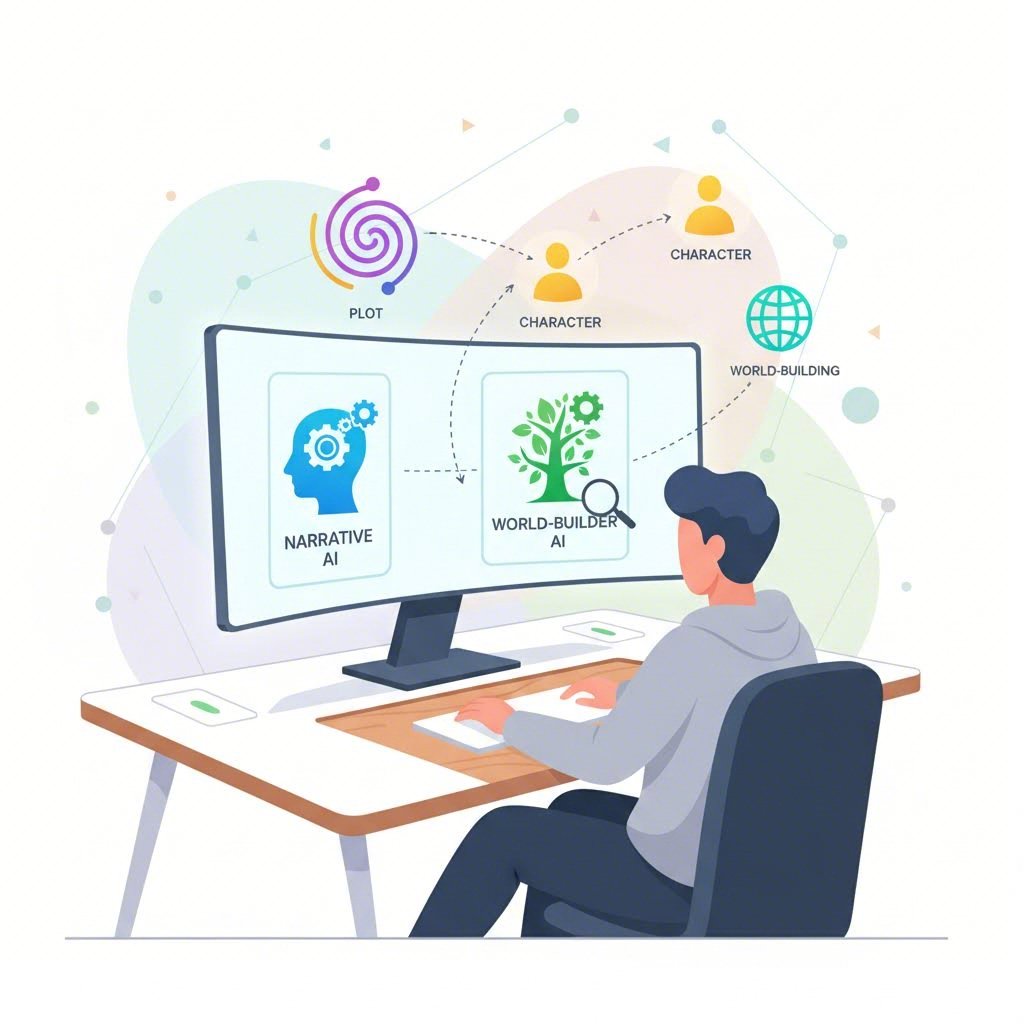
A primary consideration is the AI's narrative intelligence. A good story-writing AI does more than just string sentences together; it should demonstrate an understanding of plot structure, character arcs, and pacing. Look for tools that can generate meaningful plot twists, suggest compelling character motivations, or help you escalate tension within a scene. This is a key differentiator from general-purpose AIs that are often trained on a wide array of web content but lack the specific focus on storytelling conventions.
Consistency is another critical factor, especially for long-form projects like novels. The best AI tools offer features to maintain continuity across hundreds of pages. A feature often called a "Story Bible" or "Codex" allows you to store detailed information about your characters, settings, and lore. The AI can then reference this database as it writes, ensuring that a character's eye color doesn't change in chapter ten or that a crucial plot point from the beginning is not forgotten. This saves countless hours in editing and revision.
Finally, consider the quality of the prose and the degree of control you have over it. The ideal tool should be able to adapt to your unique voice and style. Pay attention to features that allow for rewriting, tone shifting, and expanding upon your own writing. A great AI partner can offer multiple ways to phrase a sentence or describe a scene, giving you the creative control to choose what works best. To make an informed choice, ask yourself these questions:
- What is my primary genre? Some tools excel at specific genres like fantasy or sci-fi, while others are more generalist.
- Where do I get stuck most often? If you struggle with dialogue, look for a tool with strong dialogue generation. If plotting is your hurdle, prioritize outlining and brainstorming features.
- What is my budget? Free tools can be great for experimenting, but serious writers often find paid plans offer the necessary word counts and advanced features to complete a manuscript.
- Do I need a brainstorming partner or a drafting assistant? Some tools are better for sparking ideas, while others excel at generating prose based on your outlines.
The Top AI Story Generators: Reviewed and Compared
Navigating the growing market of AI writing assistants can be overwhelming. To simplify your choice, we’ve analyzed the top-performing tools specifically praised for their fiction-writing capabilities. These platforms stand out for their feature sets, user experience, and ability to genuinely assist in the creative process. Here is a summary of our top picks.
| Tool | Key Feature | Best For | Starting Price (Approx.) |
|---|---|---|---|
| Sudowrite | Custom fiction-writing LLM (Muse) & Story Bible | Serious novelists and screenwriters | $10/month |
| Squibler | Visual corkboard and project management | Plotters and visual organizers | $16/month |
| ChatGPT Plus | Powerful, flexible general model (GPT-4) | Brainstorming, outlining, and versatility | $20/month |
| Claude | High-quality, natural-sounding prose | Drafting and refining text with a human touch | $20/month |
| Novelcrafter | Ultimate flexibility and Codex for world-building | Authors who want granular control | $14/month |
1. Sudowrite: The Dedicated Fiction Co-Writer
Sudowrite is consistently hailed as the best AI for writing stories because it was built from the ground up exclusively for fiction authors. Unlike general-purpose tools, its custom AI model has been trained on a massive library of novels and screenplays, giving it a nuanced understanding of narrative craft. Its standout feature, the Story Bible, allows you to create a comprehensive database for your world, ensuring unwavering consistency.
The platform offers a suite of powerful tools tailored to the writer's journey. The 'Write' button acts like an advanced autocomplete, generating the next few hundred words in your voice, while 'Describe' enriches your scenes with sensory details. For revision, the 'Rewrite' tool is incredibly flexible, allowing you to rephrase sentences in different tones or styles. As one detailed review notes, Sudowrite's custom model is exceptional at generating natural-sounding prose and understanding scene structure. Many writers find it's the best tool on the market for generating the actual text of a story.
Pros
- Designed specifically for fiction with a custom, uncensored AI model.
- Powerful Story Bible feature ensures character and plot consistency.
- Excellent tools for brainstorming, drafting, and revising prose.
Cons
- Can have a slight learning curve due to its rich feature set.
- The highest quality comes with a subscription cost.
2. Squibler: The Visual Planner's Companion
For writers who think visually, Squibler is a game-changer. It combines a powerful AI writing assistant with project management tools, most notably a digital corkboard. This feature allows you to arrange scenes, chapters, and plot points using virtual index cards, making it easy to structure and restructure your story. It's an ideal environment for plotters who need to see the entire narrative landscape at a glance.
Squibler offers templates for various formats, including novels and screenplays, providing a solid foundation for your project. Its 'Smart Writer' AI can help draft scenes, brainstorm ideas, and overcome writer's block. While its prose generation is solid, its primary strength lies in organization. According to hands-on tests, it's the perfect tool for writers who value structure and visual planning above all else. It delivers on its promise as a tool for those who love to outline with drag-and-drop simplicity.
Pros
- Intuitive corkboard feature for visual story planning.
- Excellent templates for novels and screenplays.
- Affordable pricing for a robust set of organizational tools.
Cons
- AI prose is not as nuanced as more specialized tools like Sudowrite.
- Performance can occasionally slow down on very large projects.
3. ChatGPT Plus: The All-Purpose Creative Powerhouse
While not a dedicated story-writing application, ChatGPT Plus, powered by OpenAI's advanced models, is an incredibly versatile and powerful tool for any writer. Its strength lies in its flexibility. You can use it for nearly any task in the writing process: brainstorming dozens of plot ideas in minutes, developing complex character backstories, creating detailed outlines, or even drafting entire scenes.
Because it's a conversational AI, the experience is highly interactive. You can refine its outputs through dialogue, asking it to make a character's speech more sarcastic or to add a layer of foreshadowing to a scene. For authors who want a single tool that can assist with writing, research, and even marketing copy for their book, ChatGPT Plus offers unparalleled value. It is, as described by many tech reviewers, one of the most powerful and feature-rich chatbots available. Its capabilities make it a formidable assistant for any creative professional.
Pros
- Extremely versatile for all aspects of the writing process.
- Excellent for rapid brainstorming and outlining.
- Constantly updated with the latest AI model advancements.
Cons
- Lacks a built-in 'Story Bible' for long-form consistency without careful prompting.
- Can sometimes produce generic or clichéd prose if not guided properly.
Specialized AI for Different Writing Needs
While tools like Sudowrite are tailored for creative fiction, the world of AI writing extends to more specific genres and formats. Different writing goals demand different features, whether you're crafting a story in an established universe or writing a fact-based non-fiction book.
For fanfiction writers, a key challenge is maintaining consistency with existing characters and worlds. An AI's ability to absorb and work within a large context window is crucial. Here, powerful chatbots like ChatGPT or Claude can be particularly effective. By feeding them detailed summaries of the source material or links to wikis, you can train the AI to write 'in character' and respect established lore, making it an invaluable partner for exploring new stories within a beloved universe.
Non-fiction writing, on the other hand, prioritizes factual accuracy, clear structure, and sometimes, search engine optimization (SEO). Tools like Writesonic and CopyAI are often better suited for this, as they are designed to generate well-structured articles and marketing copy. Similarly, for marketers and creators needing to scale high-quality blog content efficiently, a specialized tool like BlogSpark can be invaluable. It transforms ideas into SEO-optimized articles, offering features like intelligent outlining and brand voice customization, which you can learn more about at https://blogspark.ai/. These platforms often include features for research and sourcing that are less critical for purely imaginative fiction but essential for credible non-fiction.
Understanding the Legal and Ethical Landscape
A common and critical question among authors is whether they can legally publish a book written with AI assistance. The short answer is yes, but the key to ownership and copyright lies in the degree of human involvement. AI is best viewed as a powerful tool, much like a word processor or grammar checker, not as a co-author.
Current copyright law, particularly in the United States, protects works created by humans. A piece of text generated entirely by AI with no creative input from a person is generally not eligible for copyright protection. However, the work you create using AI is a different story. If you use an AI to generate a rough draft that you then heavily edit, rewrite, and infuse with your own creative expression, the resulting work is considered a product of your authorship. The legal standard revolves around the concept of "significant human authorship." Your creative choices—in plotting, character development, word selection, and editing—are what make the final story yours.
Beyond the legalities, it's important to consider the ethics of using AI in creative work. Transparency with your readers is a matter of personal choice, but the most important ethical guideline is to use AI to augment your creativity, not to replace it. To ensure you're on solid ground, follow these best practices:
- Always Edit and Revise: Never publish raw AI output. Infuse every sentence with your unique voice, style, and perspective.
- You are the Author: Take full responsibility for the final work. The AI is a tool; the story, its themes, and its impact are yours.
- Check Terms of Service: Be aware of the terms of the AI service you are using. Most platforms grant you ownership of the content you create with their tools, but it's always wise to verify.
- Focus on Collaboration: Use AI for brainstorming, overcoming writer's block, and exploring possibilities. The creative spark and the final decisions should always come from you.
Frequently Asked Questions
1. Which AI is the best for story writing?
There isn't one single "best" AI, as the ideal choice depends on the writer's needs. However, Sudowrite is widely regarded as the top contender specifically for fiction due to its custom AI model trained on novels. For visual planners, Squibler is excellent, and for general versatility, ChatGPT Plus remains a powerful option.
2. Which is the best AI story generator?
For generating story ideas and full narrative drafts, tools like Squibler's AI Story Generator and Sudowrite's drafting features are top-tier. They create original, plagiarism-free content tailored to your prompts, making them suitable for both personal and commercial projects.
3. Can I legally publish a book written by AI?
Yes, you can legally publish a book created with the help of AI. However, to secure copyright protection, the work must contain significant human authorship. Using AI as a tool to generate ideas or first drafts which you then substantially edit and rewrite makes the final work legally yours. Pure, unedited AI output generally cannot be copyrighted.
4. Is ChatGPT the best AI writer?
ChatGPT is one of the most powerful and versatile AI writers available, making it an excellent choice for a wide range of tasks, including brainstorming, outlining, and drafting stories. However, for fiction writing specifically, specialized tools like Sudowrite may offer more nuanced and context-aware prose because their models are trained specifically on creative texts.