

TL;DR
Finding the best AI model for creative writing depends entirely on your specific needs. Foundational models like Anthropic's Claude, OpenAI's GPT-4, and Google's Gemini are powerful, versatile titans, each with unique strengths in prose, dialogue, and brainstorming. However, for a more streamlined and feature-rich experience, specialized platforms such as Sudowrite and Novelcrafter offer tailored workflows, advanced story management tools, and custom-tuned models designed specifically for authors.
Evaluating the Titans: GPT-4 vs. Claude vs. Gemini for Storytelling
At the heart of any AI writing tool is its large language model (LLM), the engine that powers the creative process. For authors and storytellers, three models consistently rise to the top: OpenAI's GPT-4, Anthropic's Claude, and Google's Gemini. While all are exceptionally capable, their architectural nuances and training data result in distinct creative personalities. Understanding these differences is the key to choosing the right foundational partner for your writing project.
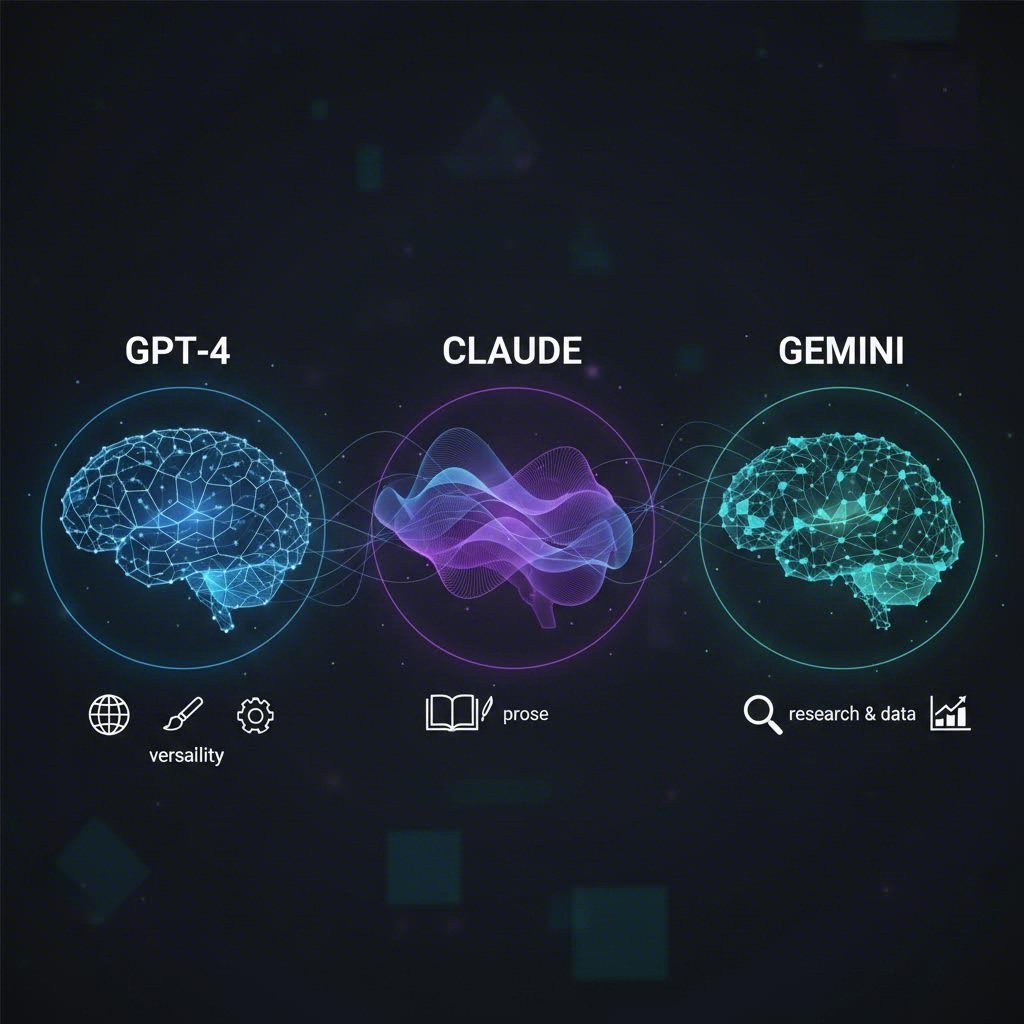
GPT-4 and its variants are often praised for their raw creative power and ability to follow complex instructions, making them a solid choice for intricate world-building and plot generation. As noted by recent tests of new OpenAI models, more powerful versions like GPT-4.1 consistently outperform smaller, cheaper alternatives for quality creative work, though they can sometimes produce clichéd ideas if not prompted carefully. This makes GPT-4 a versatile workhorse, capable of handling a wide array of creative tasks from brainstorming to drafting.
Anthropic's Claude, particularly its latest iterations, has earned a stellar reputation for generating natural, nuanced, and human-sounding prose. According to a review on Kindlepreneur, Claude's output is often preferred for its linguistic quality, making it a favorite for fiction writers focused on crafting beautiful sentences and evocative descriptions. Its massive context window (up to 200K tokens in some models) is a significant advantage for long-form projects like novels, allowing it to maintain character consistency and plot coherence over hundreds of pages.
Google's Gemini models, such as Gemini 2.5 Pro, are lauded for their advanced reasoning and multimodal capabilities. This makes Gemini an excellent tool for research-heavy creative projects, as it can seamlessly integrate information from the web. While newer to the creative writing scene, Gemini excels at brainstorming and generating culturally localized content, offering a strong balance of performance and value, especially for writers already within the Google ecosystem.
| Creative Aspect | GPT-4 | Claude | Gemini |
|---|---|---|---|
| Prose Generation | Highly versatile and creative, but can sometimes feel overly flowery without careful prompting. | Exceptional. Widely considered the best for natural, human-sounding, and nuanced prose. | Strong and improving, particularly good for clear, direct, and research-informed writing. |
| Dialogue Naturalness | Good at generating dynamic and adaptable dialogue, capturing different character voices. | Excellent. Excels at subtle, emotionally intelligent conversations that feel authentic. | Very capable, with a strength in brainstorming varied conversational styles and tones. |
| Plot Cohesion | Strong, but can sometimes introduce random elements if not given a very structured outline. | Superior, especially in long-form content, thanks to its large context window that tracks plot points. | Good, with advanced reasoning that helps maintain logical consistency in complex narratives. |
| Stylistic Versatility | Highly adaptable to various genres and styles with precise prompting and custom instructions. | Excels at maintaining a consistent authorial voice and adapting to brand-specific style guides. | Flexible and particularly strong at generating content with cultural localization and multimodal elements. |
Actionable Prompting Strategies
To maximize each model's potential, tailor your prompts. For GPT-4, be highly specific with your instructions, providing detailed outlines and style constraints. For Claude, focus on giving it a strong character voice or stylistic sample to emulate; it excels at internalizing and extending a given tone. With Gemini, leverage its research capabilities by asking it to incorporate specific facts or themes into the narrative, creating a richer, more grounded story.
Beyond the Models: Top AI Writing Platforms for Authors
While foundational LLMs provide the raw power, specialized writing platforms act as a refined toolkit, channeling that power into a workflow designed for authors. These tools offer features like story databases (codexes), character managers, and scene-by-scene generation that go far beyond a simple chat interface. They provide the structure and organization necessary to tackle large-scale creative projects like novels and screenplays.
For writers focused on marketing their work or building an author platform, content creation can be a major bottleneck. Tools like BlogSpark's advanced AI blog writer are designed to transform ideas into engaging, SEO-optimized articles in minutes. It offers features like intelligent outlining and customizable brand voice, empowering creators to scale their content production effortlessly and connect with their audience.
Among tools built specifically for fiction, Sudowrite stands out for its ease of use and custom-tuned model, Muse, which is celebrated for its ability to generate beautiful, natural-sounding prose. It's designed with fiction writers in mind, offering features to help with brainstorming, revision, and description. As noted by RivalFlow's review, it's a powerful tool for sparking imagination and overcoming writer's block.
For authors who crave ultimate control and flexibility, Novelcrafter is often compared to the Adobe Photoshop of AI writing. It features a powerful 'Codex' to store all your story lore, characters, and world-building details, making that information easily accessible to the AI during generation. It integrates with various AI models via APIs, allowing you to choose the best engine for any given task, from outlining with GPT-4 to drafting prose with Claude.
| Tool | Best For | Pricing Model | Key Features | Underlying LLM(s) |
|---|---|---|---|---|
| Sudowrite | Ease of use and high-quality prose | Subscription (credit-based) | Custom 'Muse' model, Story Bible, Rewrite, Describe features | Proprietary models, various GPT models |
| Novelcrafter | Flexibility and world-building | Subscription + Pay-as-you-go API | Codex for lore, scene-based writing, custom prompts | Connects to any model via API (Claude, GPT, Gemini, etc.) |
| Jasper | Marketing copy and brand voice | Subscription (seat-based) | Brand Voice analysis, templates, Surfer/Grammarly integration | Multiple models (GPT-4, Claude, Gemini) |
| Copy AI | Affordable copywriting and iteration | Subscription (Free tier available) | Iterative prompts, multiple templates, grammar checker | Uses various GPT models |
The Writer's Checklist: How to Judge an AI for Creative Writing
Choosing the right AI is only half the battle; knowing how to evaluate its output is what truly elevates your craft. Beyond just generating text, a great creative AI must serve as a reliable co-author. This requires judging it on a specific set of criteria crucial to storytelling. By developing a critical eye for these factors, you can effectively test any tool and find the one that best complements your unique writing style and project goals.
The first and most critical criterion is Coherence and Consistency. A story falls apart if a character's eye color changes mid-chapter or a key plot point is forgotten. This is where a model's context window is vital. As detailed in a guide by Aloa, models like Claude and Llama 4 with massive context windows are superior at maintaining narrative consistency in long-form projects, ensuring details remain stable across hundreds of pages.
Next is Stylistic Control. The AI shouldn't just write; it should write in your voice, or the specific voice required for the project. The best tools allow you to feed them samples of your writing to create a custom brand voice. When testing an AI, see how well it can mimic different styles—from Hemingway's stark prose to a more florid, descriptive tone. Its ability to adapt is a direct measure of its flexibility as a creative partner.
Finally, assess Originality and Uniqueness. A common failure of lesser models is a reliance on tired tropes and generic plotlines. A quality AI should be a source of inspiration, offering unexpected twists and fresh ideas. When you provide a prompt, does it return a predictable response, or does it offer a surprising angle that sparks new creative avenues? The goal is not to have the AI write the story for you, but to have it expand your own creative possibilities.
Your AI Evaluation Scorecard:
- Coherence: Does the AI remember key details from earlier in the text? (Score 1-5)
- Consistency: Are character voices and narrative tone maintained throughout the generated text? (Score 1-5)
- Stylistic Adherence: How well does the AI adopt the specific style or voice you requested? (Score 1-5)
- Originality: Does the output feel fresh and creative, or does it rely on clichés? (Score 1-5)
- Prompt Following: How accurately does the AI follow complex, multi-part instructions? (Score 1-5)
Choosing Your AI Co-Author
The journey to finding the best AI model for creative writing is deeply personal and project-dependent. There is no single 'best' tool, only the right tool for your current task. For raw, versatile power and brainstorming, foundational models like GPT-4, Claude, and Gemini offer incredible capabilities directly through their chat interfaces. They are the clay from which any story can be molded.
However, for the dedicated author embarking on a novel or a series, specialized platforms like Sudowrite and Novelcrafter provide the potter's wheel—the structure, organization, and specialized features that transform raw potential into a finished work of art. These tools streamline the complex process of long-form storytelling, managing everything from lore to character arcs.
Ultimately, the most effective approach is to experiment. Use the evaluation criteria to test different models and platforms. See which one best captures your voice, understands your vision, and sparks your creativity. The perfect AI co-author is out there, ready to help you tell your story more effectively and efficiently than ever before.

Frequently Asked Questions About AI for Creative Writing
1. What is the best AI to use for creative writing?
The best AI depends on your needs. For high-quality, natural-sounding prose, many authors prefer Anthropic's Claude. For ultimate flexibility and control, a platform like Novelcrafter, which lets you connect to various models, is ideal. For ease of use with features designed for fiction, Sudowrite is a top choice. It's recommended to try a few to see which workflow and output style you prefer.
2. Which OpenAI model is best for creative writing?
Generally, the most powerful and recent version of GPT-4 (like GPT-4o or any updated variant) will be the best OpenAI model for creative writing. These models offer the greatest capacity for understanding complex instructions, maintaining narrative coherence, and generating creative and versatile text. While smaller models are more cost-effective, they often lack the nuance and consistency required for high-quality creative work.
3. Is Claude or GPT better at writing?
This is a matter of ongoing debate and often comes down to personal preference. Claude is frequently praised for producing prose that is more nuanced, emotionally resonant, and 'human-like' right out of the box, making it a favorite for literary and character-driven fiction. GPT models, particularly GPT-4, are often seen as more powerful for complex world-building, intricate plotting, and adhering to very specific, technical instructions. Many writers use both, leveraging Claude for prose and dialogue and GPT-4 for outlining and brainstorming.