

TL;DR
Finding the best AI for story writing depends entirely on your needs. For dedicated fiction authors seeking high-quality prose and specialized features, Sudowrite is a top contender. For writers who need a versatile partner for brainstorming, outlining, and drafting across genres, chatbots like Claude and ChatGPT offer incredible flexibility. If you're starting out or on a budget, free tools like Squibler provide a great entry point to spark creativity without commitment.
Evaluating Your Modern Muse: Key Criteria for Selecting an AI Story Writer
Before diving into a sea of software, it's crucial to understand what separates a helpful AI writing partner from a frustrating one. At their core, these tools are powered by large language models (LLMs) like GPT, but specialized applications wrap these models in interfaces and feature sets designed specifically for authors. Understanding this distinction, as highlighted by experts at Kindlepreneur, is the first step in making an informed choice. The right tool isn't just about the raw AI; it's about how that AI is harnessed to serve the creative process.
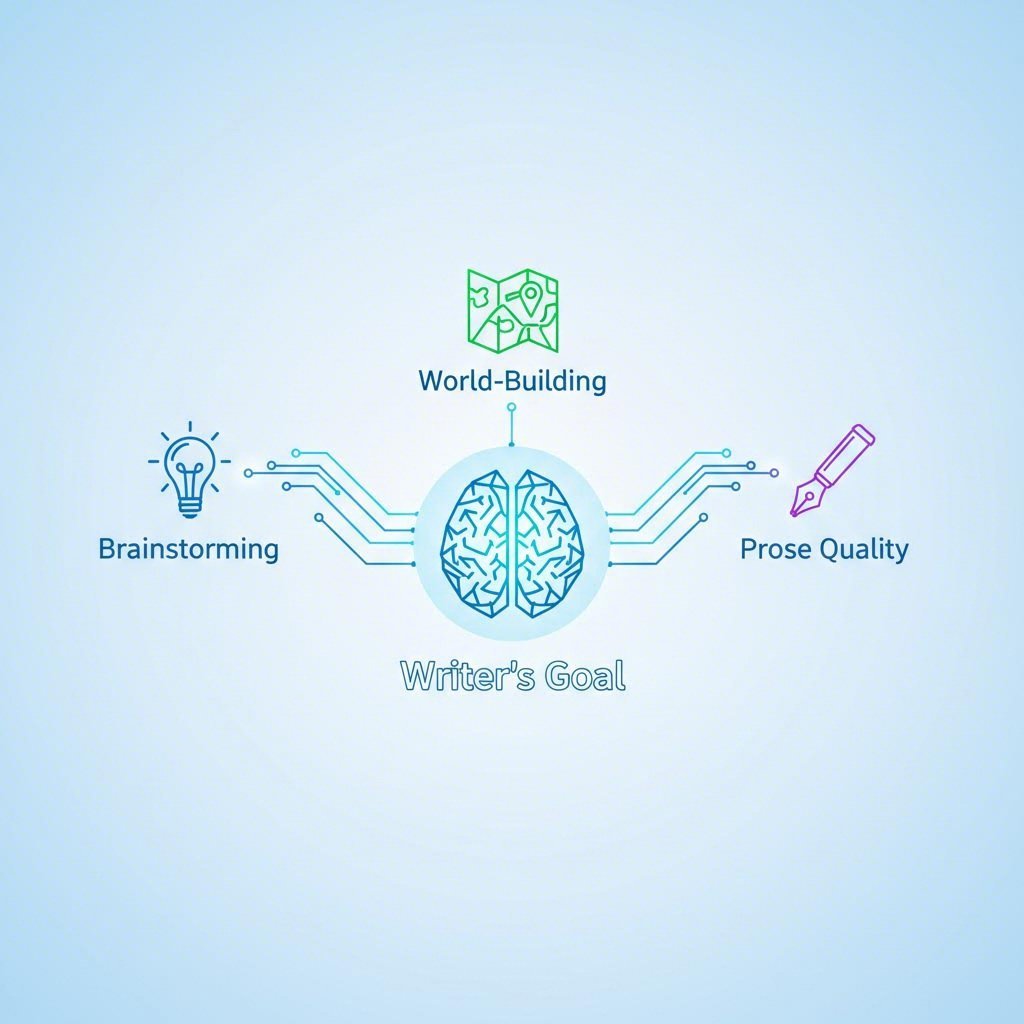
When evaluating options, focus on a few key criteria. Prose quality is paramount—does the AI generate text that sounds natural and aligns with your voice, or is it robotic and repetitive? Genre specialization is another critical factor. A tool like Sudowrite is built from the ground up for fiction, with an intuitive understanding of scene structure, pacing, and description. In contrast, generalist tools are better suited for non-fiction or marketing copy. Also, consider the tool's features for brainstorming, outlining, and world-building. A powerful feature like Novelcrafter's "Codex" allows you to create a detailed database for your story's characters and lore, ensuring consistency as the AI writes.
To find your perfect match, ask yourself these questions before you commit:
- What is my primary goal? (e.g., overcoming writer's block, drafting faster, editing, brainstorming)
- What genre do I write in? (e.g., sci-fi, romance, memoir, technical non-fiction)
- How much control do I want over the AI's output? Do I prefer a flexible, customizable tool or a simple, guided experience?
- What is my budget? Am I looking for a free tool to start with, or am I willing to invest in a premium subscription?
Finally, consider the pricing model. Some tools offer monthly subscriptions, while others operate on a pay-as-you-go credit system. Your choice will depend on your writing frequency and project scale. The table below maps common writer needs to the features you should prioritize.
| If You Need... | Look for a Tool With... |
|---|---|
| High-Quality, Evocative Prose | A custom-trained model for fiction (like Sudowrite's) or features to refine tone and style. |
| Complex World-Building & Lore | A 'Codex' or 'Story Bible' feature to store and reference character and world details. |
| Flexibility and Total Control | The ability to use different AI models and create custom prompts (like Novelcrafter). |
| Speed and Efficiency | Features for outlining, chapter generation, and scene expansion to accelerate drafting. |
Top AI Story Generators for Fiction Authors: In-Depth Reviews
For novelists and short story writers, the goal is to find an AI that acts as a true creative partner—one that understands the nuances of narrative, character, and tone. The market has responded with several tools built specifically for the art of fiction. These platforms go beyond simple text generation, offering features that help you brainstorm, structure your plot, and polish your prose until it shines.
Sudowrite: Best for Intuitive Prose Generation
Sudowrite has earned a reputation as a favorite among fiction authors, and for good reason. As its website proudly states, it aims to be the "best AI writing partner for fiction." Its greatest strength lies in its custom AI model, which is specifically trained for creative writing and produces prose that often feels more natural and evocative than general-purpose models. Features like 'Describe' help you paint a vivid picture by suggesting sensory details, while 'Expand' can flesh out a rushed scene to improve pacing. 'Write' acts like an advanced autocomplete, analyzing your story's tone and characters to suggest the next 300 words.
Pros
- Excellent, natural-sounding prose from its custom model.
- Intuitive features designed for specific fiction-writing tasks (describing, expanding, rewriting).
- Uncensored, making it suitable for all genres, including romance and horror.
Cons
- Less flexible than some competitors; you are limited to the models Sudowrite provides.
- The credit-based pricing structure can be a bit expensive for heavy users.
Novelcrafter: Best for Ultimate Flexibility and Control
If Sudowrite is an intuitive partner, Novelcrafter is a powerful, customizable workshop. Described as the "Adobe Photoshop of AI writing tools," it offers unparalleled control for writers who love to tinker. Its standout feature is the 'Codex,' a database where you can store extensive information about your characters, locations, and lore. This ensures the AI maintains consistency throughout a long manuscript. Novelcrafter also integrates with services like OpenRouter, giving you access to virtually any major AI model on the market. This flexibility allows you to choose the best model for any given task, from brainstorming with one AI to drafting with another.
Pros
- Extremely powerful 'Codex' for maintaining story consistency.
- Total flexibility to use various third-party AI models.
- Highly customizable prompts for fine-tuning AI output.
Cons
- Has a steeper learning curve due to its complexity.
- The pricing model includes a monthly fee plus pay-as-you-go costs for AI usage.
Leading AI Writing Assistants for Non-Fiction and General Use
While some tools focus exclusively on fiction, a powerful class of AI assistants excels at non-fiction, copywriting, and general-purpose writing. These tools are perfect for authors working on memoirs, articles, and blog posts, as well as for marketers and content creators who need to produce high-quality content at scale. They prioritize clarity, research, and versatility, making them invaluable for a wide range of projects.
For creators and marketers struggling with content bottlenecks, a specialized platform like BlogSpark can be a game-changer. Its advanced AI blog writer is designed to transform ideas into engaging, SEO-optimized articles in minutes. With features like intelligent outlining, customizable brand voice, and seamless CMS integration, it empowers users to scale their content production effortlessly. You can explore how to supercharge your workflow at https://blogspark.ai/.
ChatGPT: The Ultimate All-Rounder
ChatGPT remains one of the most powerful and versatile AI tools available. For non-fiction writers, its strength lies in its ability to research topics, summarize complex information, and generate well-structured drafts. It can act as a brainstorming partner for article ideas, help create detailed outlines, and even assist in editing for clarity and tone. Its conversational interface makes it incredibly easy to use for a wide variety of tasks, from generating a quick social media post to drafting a chapter of a book.
Pros
- Extremely versatile for research, brainstorming, drafting, and editing.
- Access to powerful models from OpenAI.
- Constantly updated with new features like web browsing and data analysis.
Cons
- Prose can sometimes feel generic or overly flowery without careful prompting.
- Content may be censored for certain topics.
Claude: Best for Natural Language and Long-Form Content
Claude has quickly become a favorite for writers who prioritize natural, human-sounding prose. It often produces text that is less robotic and more nuanced than its competitors. One of its biggest advantages, as noted in reviews, is its massive context window, which allows it to process and analyze entire documents up to 150,000 words. This makes it an exceptional tool for summarizing research, analyzing your own manuscript for consistency, or maintaining a coherent voice throughout a long piece of non-fiction.
Pros
- Generates high-quality, natural-sounding prose.
- Large context window is ideal for working with long documents.
- Minimalist and user-friendly interface.
Cons
- Highly censored, which can be restrictive.
- Lacks some of the advanced features (like image generation) found in other chatbots.
The Best Free AI Story Generators: Sparking Creativity Without a Budget
The demand for free AI story writing tools is immense, and fortunately, several excellent options can help you brainstorm ideas and overcome writer's block without costing a dime. While free tools often come with limitations—such as word count caps or fewer advanced features—they are a fantastic way to experiment with AI and kickstart your creative process. They are perfect for generating story prompts, drafting short scenes, or simply playing with new ideas.
Many free tools are surprisingly capable. According to a review on Break Into English, platforms like Prepostseo's generator and Summarizer.org's tool offer impressive features like selectable creativity levels and story types, allowing for a good degree of customization. These tools prove that you don't need a paid subscription to get a helpful AI assist. They are especially useful for students, hobbyists, or any writer who just needs a small creative nudge.
Here’s a quick comparison of some leading free options:
| Tool | Key Feature | Best For |
|---|---|---|
| Squibler | Offers a free version with a monthly word and image generation limit. | Authors wanting to try a full-featured writing environment. |
| Canva's Story Generator | Integrated into the Canva Docs ecosystem, great for visual storytelling. | Creating short stories or prompts alongside design elements. |
| Summarizer.org's AI Story Generator | Adjustable story length, creativity levels, and multiple story types. | Customizing story outputs without signing up. |
When using free tools, it's best to see them as assistants rather than replacements. Use them to generate a premise, develop a character sketch, or write a single scene when you're stuck. Then, take that generated content and infuse it with your own unique voice and creativity. This approach allows you to leverage the power of AI to spark ideas while still retaining full ownership of your work.

Beyond the Bot: Navigating Copyright and Ethics in AI Writing
As authors embrace AI, a critical question emerges: can you legally publish a book written by AI? The answer is complex and hinges on the concept of human authorship. Currently, in the United States, copyright law protects works created by humans. Purely AI-generated text, without significant creative input or modification from a person, is generally not eligible for copyright protection. This means if you simply take the output of an AI and publish it verbatim, you may not have legal ownership of the work.
The key to securing copyright is to use AI as a tool, not as a ghostwriter. The more you edit, revise, and transform the AI's output, the stronger your claim to authorship becomes. Think of the AI as a collaborator that provides a very rough first draft or suggests ideas. It's your creative decisions—your choice of words, sentence structure, plot developments, and character arcs—that constitute the 'human authorship' the law protects. Using AI to brainstorm, overcome writer's block, or suggest alternative phrasing is perfectly acceptable and does not jeopardize your copyright.
Beyond the legalities, there are ethical considerations. Transparency with readers is a growing topic of discussion. While there's no legal requirement to disclose your use of AI, some authors choose to be open about their process to maintain trust with their audience. The most important ethical guideline is to ensure the final work is truly yours. Avoid over-reliance on the AI to the point where it diminishes your own creative voice. The goal is to enhance your storytelling, not automate it.
Here are some best practices for using AI responsibly:
- Edit Heavily: Never publish raw AI output. Rewrite sentences, restructure paragraphs, and infuse the text with your unique style.
- Use it for Specific Tasks: Leverage AI for brainstorming, outlining, or researching, rather than writing the entire manuscript.
- Fact-Check Everything: AI models can 'hallucinate' or invent facts. Verify any factual claims, especially in non-fiction writing.
- Retain Creative Control: You are the author. The AI is your assistant. Make sure the final creative vision and execution are yours.
Frequently Asked Questions About AI Story Writing
1. Which AI is the best for story writing?
There is no single "best" AI; the ideal tool depends on your specific needs. For fiction writers who prioritize high-quality, nuanced prose, a specialized tool like Sudowrite is often recommended. For maximum flexibility, world-building, and control over different AI models, Novelcrafter is a powerful choice. For general versatility in brainstorming, research, and drafting across both fiction and non-fiction, chatbots like Claude and ChatGPT are excellent all-rounders.
2. Can I legally publish a book written by AI?
You can legally publish a book created with the assistance of AI, but copyright protection depends on human authorship. Purely AI-generated text without significant human modification is not copyrightable. To claim ownership, you must substantially edit, revise, and shape the AI's output, making the final work a product of your own creativity. Using AI as a tool for brainstorming or drafting is fine, but the final creative expression must be yours.
3. What is the free AI that will write stories?
Several free AI tools can write stories. Squibler offers a free plan that allows you to generate a limited number of words per month within a professional writing interface. Other popular options include Canva's AI Story Generator and various web-based tools like those from Prepostseo and Summarizer.org. These tools are great for generating prompts, ideas, and short drafts, but often have limitations compared to paid versions.